Prime Minister Abiy Ahmed has heralded a new era of governance in Ethiopia, claiming that emerging technologies like Artificial Intelligence (AI) and Quantum Computing are reducing year-long administrative tasks to mere minutes.
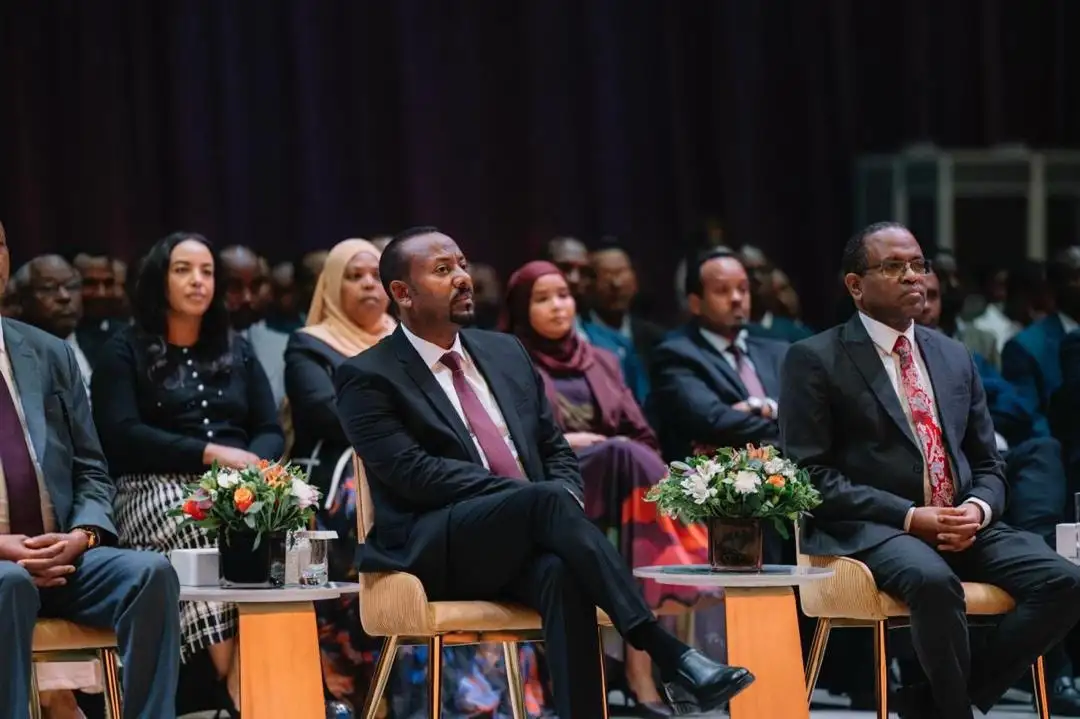
Speaking at the unveiling of the Digital Ethiopia 2030 roadmap, Dr. Abiy described a radical shift away from the traditional image of the state. He noted that the days of massive, paper-cluttered offices and space-consuming data centres are being replaced by compact, high-efficiency digital systems. These advancements, he argued, are not just saving physical space but are fundamentally accelerating the speed at which the government can deliver results.
Central to the 2030 vision is a focus on "indigenous innovation." The Prime Minister emphasized that Ethiopia must not simply be a consumer of global software; it must build its own "hardware" future, including robotics and cloud infrastructure. He characterized the nation’s youth and their creative talent as a form of "national infrastructure," promising specialized support for gifted innovators through new startup hubs.
During a question-and-answer session, the Prime Minister spoke candidly about the psychology of progress, distinguishing between "ordinary thoughts" and the resilient mindset required for true innovation.
"A creative person does not fear failure," Dr. Abiy told the audience. He argued that the hallmark of a true innovator is the courage to experiment repeatedly, even when success is not immediate. He reassured the burgeoning tech sector that the government views them as "partners, not hurdles," explaining that state intervention in some areas is intended to foster healthy competition rather than stifle it.
Reflecting on the progress made since 2018, when government offices were still defined by "piles of paper," the Prime Minister described the transition to a digital-first economy as an irreversible journey toward a "bright and efficient" future for all Ethiopians.