
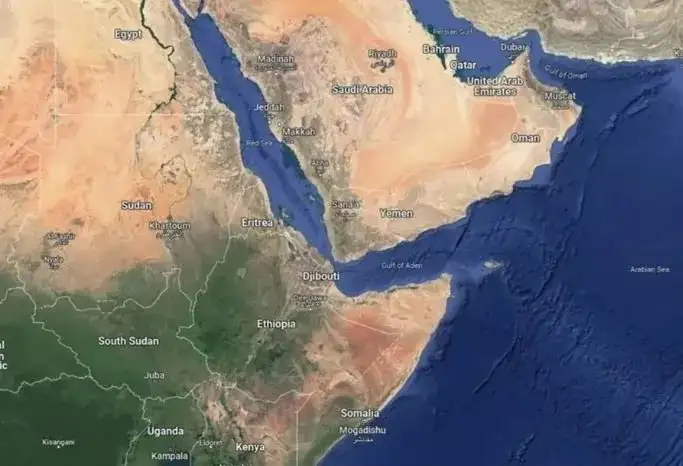
Ethiopia’s renewed pursuit of sea access is not a new ambition born of modern geopolitics; rather, it is the revival of a historical mandate deeply rooted in antiquity. From the era of the Axumite Empire, Ethiopia was a maritime-linked civilization whose political authority, economic vitality, and international stature were inseparable from access to the Red Sea.
Sea Access in the Axumite Empire
The Axumite Empire (c. 1st–7th centuries AD) was one of the great powers of the ancient world, alongside Rome, Persia, and China. Its strength rested not only on fertile highlands but also on strategic control of Red Sea trade routes. Ports such as Adulis served as Ethiopia’s maritime gateway, linking the empire to Arabia, the Mediterranean world, India, and beyond. Through these ports, Axum exported gold, ivory, incense, and agricultural products, while importing luxury goods and ideas that enriched its civilization.
Ancient Greek, Roman, and Persian sources consistently describe Axum as a naval and trading power. Sea access enabled Ethiopia to mint its own coins, project influence across the Red Sea, and engage diplomatically with global powers. In this period, Ethiopia’s identity as a sovereign state was inseparable from its maritime presence.
Loss of the Coast and Historical Disruption
Over centuries, shifts in regional power, foreign incursions, and colonial interventions gradually severed Ethiopia’s direct access to the sea. The most consequential break came in the late 20th century, when geopolitical changes left Ethiopia landlocked. This loss was not merely territorial; it disrupted a historical continuum that had connected Ethiopia to global trade and maritime culture for millennia.
Being landlocked imposed heavy economic costs, increased dependency on external corridors, and constrained national logistics, trade competitiveness, and strategic autonomy. For a nation with one of the longest continuous state traditions in the world, this situation has long been viewed as historically abnormal rather than permanent.
Reclaiming Sea Access as a Historical Right
Today, Ethiopia’s call for sea access is increasingly framed as a peaceful, lawful, and mutually beneficial reclamation of historical rights, not an act of expansionism. The argument rests on history, demography, and economics: a nation of over 120 million people with ancient maritime roots cannot remain indefinitely dependent on others for access to global trade routes.
From the Axumite ports of antiquity to modern logistics corridors, Ethiopia’s engagement with the sea has always been central to its development. Reclaiming sea access is therefore seen as restoring historical balance—reconnecting the hinterland to the coast in a way that supports regional integration, shared prosperity, and stability in the Horn of Africa.
Regional Cooperation and the Future
Importantly, Ethiopia’s contemporary approach emphasizes dialogue, cooperation, and economic integration, rather than conflict.
Modern sea access does not necessarily mean exclusive sovereignty over ports; it can take the form of long-term agreements, shared infrastructure, joint port development, and integrated logistics systems that benefit all parties.
Just as the Red Sea once connected Axum to the wider world, a cooperative maritime framework today can transform the Horn of Africa into a hub of trade, energy, and transport. Ethiopia’s vision aligns with this historical precedent—using sea access as a bridge for commerce, cultural exchange, and regional peace.
Conclusion
Ethiopia’s effort to reclaim sea access is best understood not as a new political demand, but as the continuation of an ancient historical mandate. From the Axumite Empire’s control of Red Sea trade to today’s logistics-driven global economy, access to the sea has been central to Ethiopia’s sovereignty and prosperity. Re-establishing this link—peacefully and cooperatively—is both a historical correction and a strategic necessity for the future.