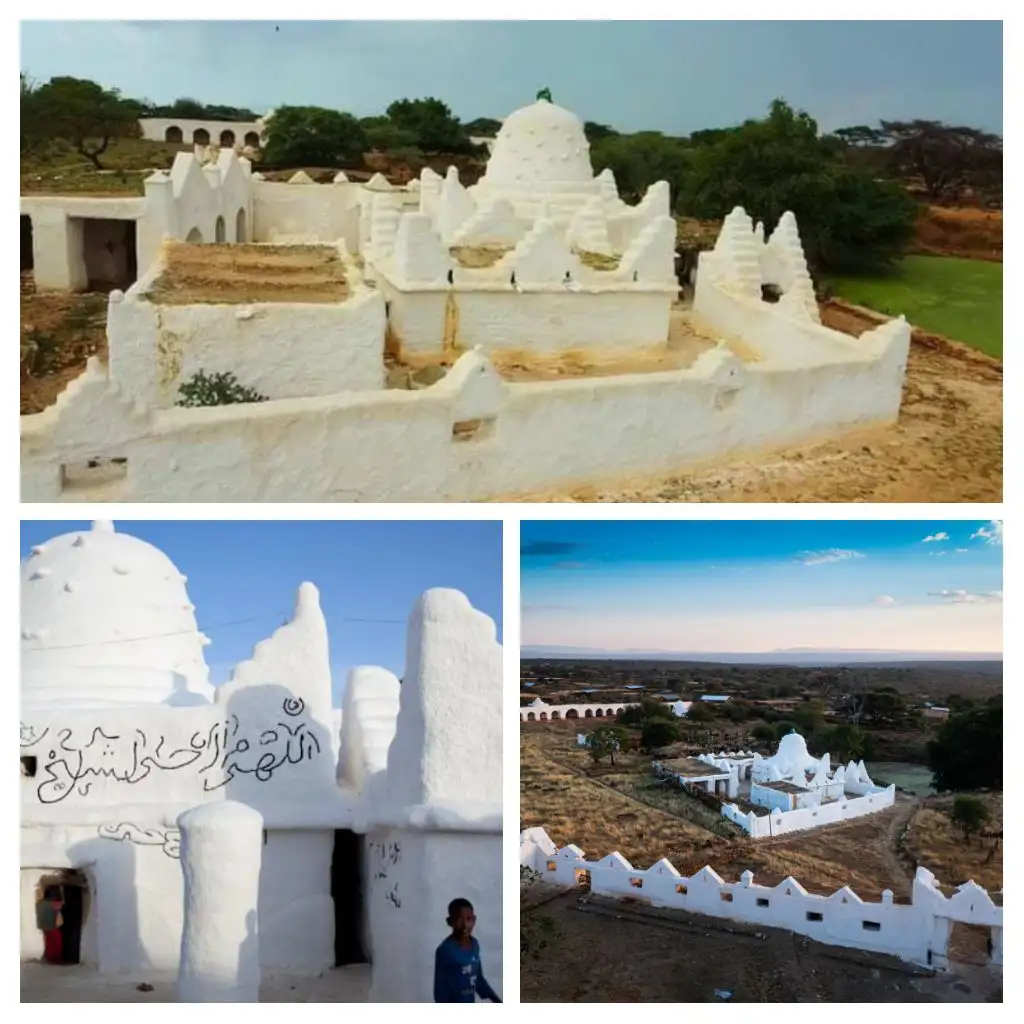
The Dire Sheikh Hussein Mosque, one of Ethiopias most significant spiritual and historical landmarks, is being put forward for international recognition. Hiwot Hailu, the Deputy Director General of the Ethiopian Heritage Preservation Authority, has confirmed that formal efforts are underway to register the site, located in the East Bale Zone, as a UNESCO World Heritage site. Speaking to EBC, she emphasized the government's commitment to preserving such historical treasures for future generations.
The mosque takes its name from the revered Islamic leader Sheikh Nur Hussein and remains a prominent center of faith. It serves as a living museum of ancient civilization, featuring a water pond that dates back to the 11th century. Experts describe the site as a masterclass in period Ethiopian architecture, noted for its brilliant white-washed buildings that are visible from miles away. The construction utilizes a sophisticated blend of local stone and lime, merging traditional Arabian aesthetics with indigenous craftsmanship to create a structure that has retained its elegance for nearly a millennium.
Beyond its architectural value, the site remains a vibrant cultural hub. Twice a year, during the festivals of Mawlid and Eid al-Adha, thousands of pilgrims travel to the mosque for traditional prayers and spiritual reflection.
To support the mosques growing profile as a major tourist destination, local authorities are investing heavily in the surrounding region. Jarso Boru, the Chief Administrator of the East Bale Zone, stated that essential infrastructure projects have already begun. These developments include the construction of new roads to improve access, the extension of the power grid, and the provision of clean drinking water, all aimed at transforming the area into a world-class heritage destination.