The Ministry of Foreign Affairs announced today, that Ethiopia is executing strategic diplomatic initiatives designed to safeguard its national interests while bolstering its influence on regional, continental, and global scales.
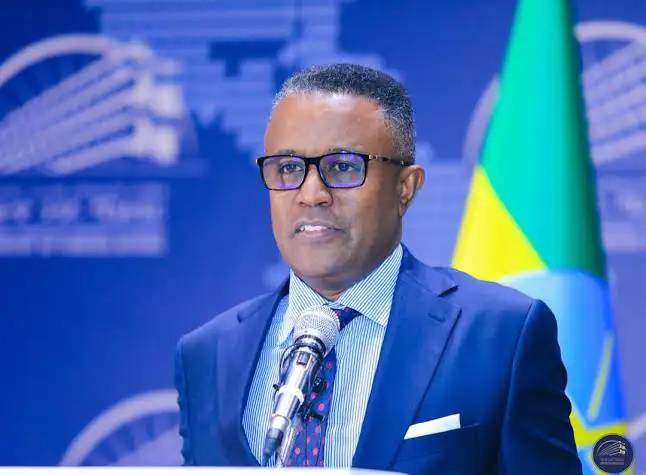
The Spokesperson of the Ministry of Foreign Affairs, Ambassador Nebiat Getachew provided a press briefing on current affairs, highlighting a surge in high-level diplomatic activity. Over the past few weeks, the leaders of Burundi, Liberia, Mozambique, and South Sudan conducted official working visits to Ethiopia. During these visits, the leaders held productive discussions with Prime Minister Abiy Ahmed (PhD) aimed at deepening bilateral ties.
Ambassador Nebiat noted that Ethiopia has signed several bilateral agreements to share its expertise and collaborate in sectors where the country has shown significant growth, including artificial intelligence (AI), agriculture, tourism and the green legacy initiative.
Beyond African leadership, Ethiopia recently hosted the Foreign Ministers of Portugal, Bangladesh, and Austria, as well as China’s Special Envoy for the Horn of Africa. These engagements have allowed Ethiopia to clearly articulate its positions on critical regional and international issues.
Ambassador Nebiat also highlighted the European mission of Foreign Minister Gedion Timotheos (PhD), who recently visited Sweden and Norway. During his trip, the Minister held successful talks with government officials and corporate executives to promote trade and investment, specifically targeting renewable energy, technology, and tourism.
On the multilateral front, the spokesperson emphasized Ethiopia’s active role as the current President of the African Union Peace and Security Council. Ethiopia has successfully introduced key agendas to the council, including discussions on the Strait of Hormuz from an African perspective, alongside other continental security matters.
The Spokesperson concluded that these combined bilateral and multilateral diplomatic efforts are successfully securing Ethiopia’s national interests and cementing its role as a key player in international affairs.