
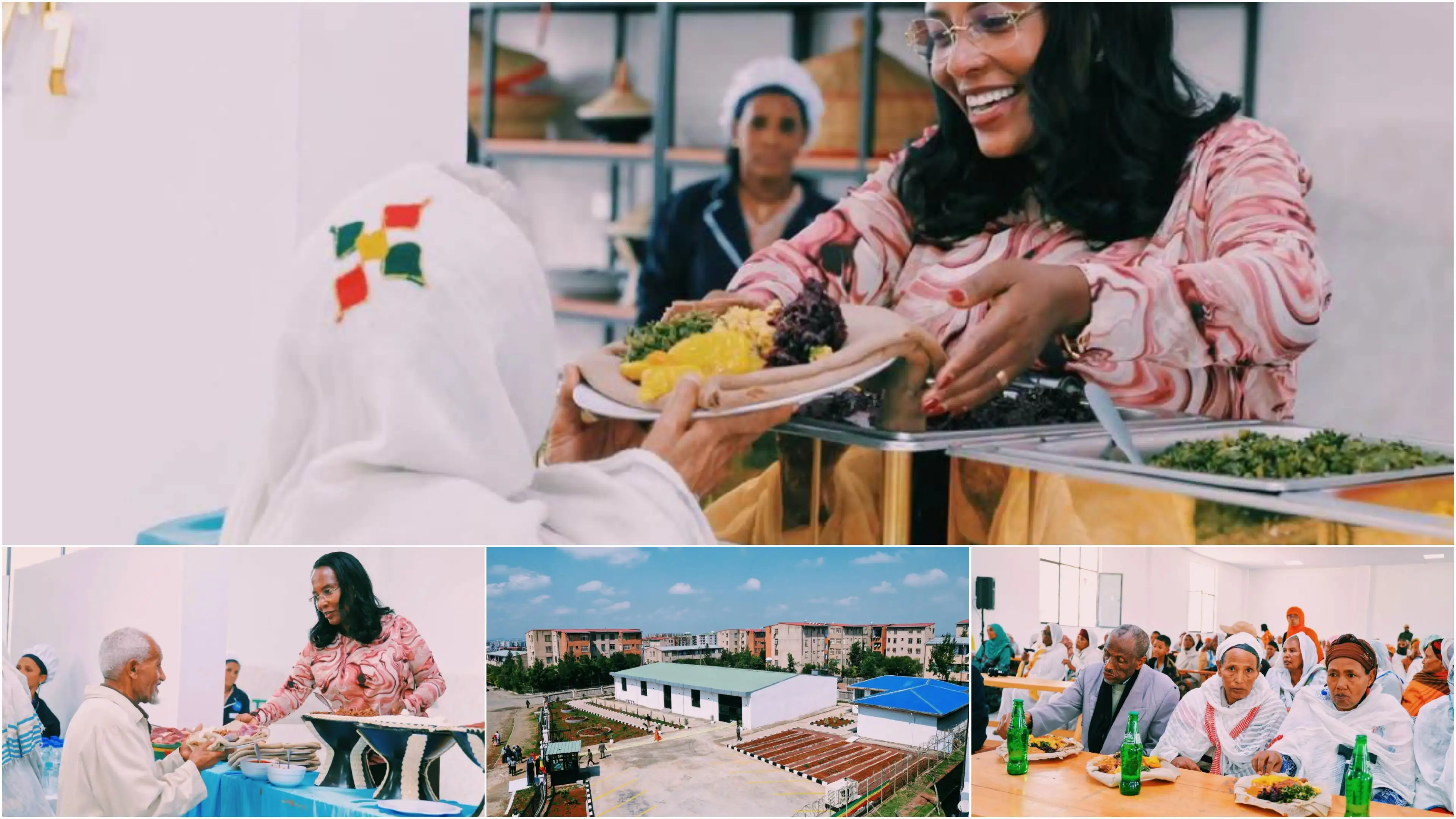
"Seeing our fellow citizens struggle to get one full meal a day in a city where food is often left over and thrown away is a shared pain and a great responsibility we must all shoulder."
This powerful sentiment, expressed by Addis Ababa Mayor Adanech Abiebie during the inauguration of the city's 30th residents' feeding center in Yerer, highlights a strong commitment to establishing social justice within the capital.
The Yerer facility was primarily established to support vulnerable citizens lacking regular income or shelter. Many of these individuals were relocated from the Kirkos area due to the Sheraton Hotel expansion project, alongside others displaced from Kazanchis. Reaffirming the government's focus on people-centered development, Mayor Adanech stated that the city cannot abandon its residents simply because they lack legal housing, noting that the administration has actively taken responsibility for accommodating many of those affected.
The launch of these feeding centers provides a vital safety net, ensuring that citizens—particularly those displaced by urban development—receive clean, fresh meals free of charge. Beyond serving as a dignified haven where the elderly and vulnerable can eat and socialize, the centers act as a crucial bridge over temporary hardships. They even feature a delivery system that brings meals directly to the homes of those too frail to travel.
However, the initiative's long-term objective is not to foster dependency. Instead, it is designed to guarantee immediate food security while gradually transitioning individuals into stable employment. This strategy is already showing success. Thousands of citizens supported by the 29 previously established centers have steadily integrated into the workforce, and at the newly opened Yerer center, several residents were hired as caterers and servers on inauguration day alone.
Broader poverty-reduction efforts in the city are also yielding tangible results. Over 100,000 former beneficiaries of the city's safety net program have not only achieved self-reliance but are now in positions to employ others.
City officials emphasize that this culture of mutual support is not solely a government burden. It reflects a broader social responsibility, with investors and middle-income citizens actively contributing a portion of their own earnings to sustain the programs. To maintain high service standards, the Feeding Agency continuously monitors the facilities, with the government budget covering any operational shortfalls.
Ultimately, the opening of the 30th feeding center serves as a powerful reminder that true, sustainable urban development relies on more than just constructing buildings. It requires tireless effort, mutual support, and a shared commitment to uplifting the most vulnerable members of society.