By: Demis Mekuriyaw
When a country changes its story every few months, the point of tracking it isn't to catch a lie. It's to notice the pattern. And the pattern around the Grand Ethiopian Renaissance Dam is now impossible to miss: whatever the water does, Ethiopia is to blame for it.
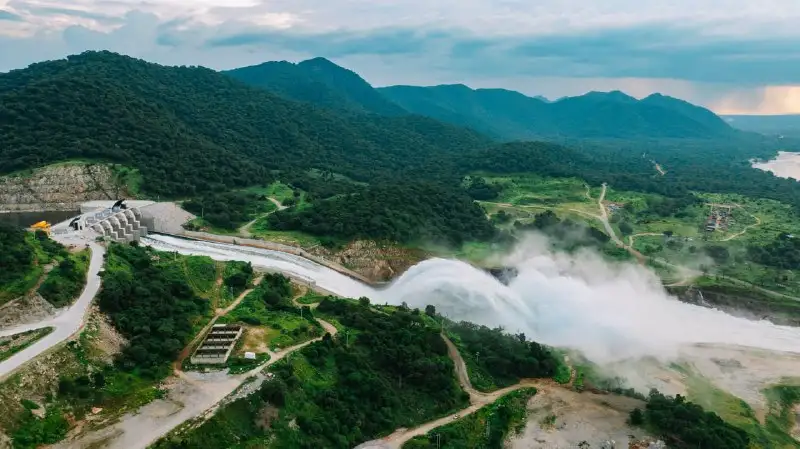
In September 2025, Egypt's irrigation ministry accused Ethiopia of engineering a "man-made flood," claiming Ethiopian operators, after rapidly filling the reservoir for what Cairo called a "media snapshot," suddenly surged releases from 485 million cubic meters a day on 10 September to a peak of 780 million cubic meters a day on 27 September. By then Egypt claimed this surge inundated farmland in Sudan and its own Nile Delta, putting “the lives and resources of the populations of the two downstream countries at risk.”
Ten months later, in July 2026, the same Egyptian and Sudanese ministries are accusing Ethiopia of the opposite crime: withholding water, with Roseires inflow falling from 207 million cubic meters a day to 129 between 7 and 9 July. Read those two episodes back to back, and the accusation flips entirely: too much water in September, too little in July. In one telling, that number is a flood. In the other, it's a drought. The dam didn't change. The accusation did. That is not a hydrological complaint. It's a script, and it's worth reading it as one.

What Sudan's own ministry actually said versus what got quoted?
Here is where the current media wave falls apart under its own weight. Yes, Sudan's Ministry of Agriculture and Irrigation reported that Roseires inflow dropped from 207 to 129 million cubic meters a day between 7 and 9 July and that river levels fell 1.7 meters at Wad al-Ais, 1.6 at Wad Madani, and 1.5 at Roseires, tapering to close to a meter by Khartoum and to roughly half a meter by Shendi. 
What got buried is that the same Sudanese ministry described the situation as "stable," calling the decline "temporary" and noting White Nile flows were running above their long-term average, with Nile levels north of Khartoum still higher than at the same point in 2025. That is Sudan's own technical authority, the body closest to the gauges, refusing to describe this as a crisis. The crisis framing is coming from Cairo, several hundred kilometers downstream, using Khartoum's raw numbers while discarding Khartoum's own conclusion.
And then there's the detail that should have been the headline instead of a footnote: an anonymous senior official inside Egypt's own Ministry of Water Resources and Irrigation told Al Manassa that the decline coincided with lower rainfall over the Ethiopian Highlands—while separately confirming that daily data sharing on the dam's releases "remains suspended." In other words, Egypt's own technical staff is pointing to a rainfall deficit and a data-sharing gap. Egypt's foreign minister is describing sabotage. Those two accounts came from the same government within days of each other.
Hydrology also provides important context that daily political statements often overlook. Long-term records from the Blue Nile show that the river is among the most seasonal major rivers in the world. At Roseires Dam, average discharge increases from roughly 155–331 m³/s during the dry months (January–April) to over 2,400 m³/s in July, before peaking at more than 5,700 m³/s in August, then gradually receding through October. Similar long-term records from the Ethiopia–Sudan border (El Diem/GERD station) show the same pattern, with average flows rising from only a few hundred cubic meters per second during the dry season to well above 5,600 m³/s at the flood peak.
Against that hydrological backdrop, a three-day reduction in inflow, from 207 million to 129 million cubic meters per day, does not, by itself, establish deliberate upstream withholding. River discharge during the July–September flood season is influenced by rainfall variability across the Ethiopian Highlands and routine flood-management practices at multiple dams throughout the basin.
Ethiopia, notably, has not confirmed that discharge was reduced at all. The entire "unilateral withholding" narrative rests on downstream inference and Egyptian/Sudanese monitoring not on any admitted Ethiopian action. A claim resting entirely on inference from the accuser's side of the border is not evidence. It's a hypothesis dressed up as a diplomatic incident.
The "no legally binding agreement" line and what it's actually asking for
Cairo's other standing line is that Ethiopia refuses a "legally binding agreement," as if Ethiopia is the outlier for wanting flexibility instead of a fixed allocation. Two things are worth saying plainly here. First, the Manchester-led research team's actual finding cuts against what Egypt implies is reasonable: their models show that dynamic, coordinated management, not a rigid, permanent allocation carved in stone, is what protects downstream users while preserving Ethiopia's development gains. Second, "legally binding" from Cairo has historically meant an agreement anchored in the 1959 Nile Waters Agreement, a deal negotiated between Egypt and Sudan alone, allocating 55.5 billion cubic meters to Egypt and 18.5 billion to Sudan, with zero share for Ethiopia, the source of roughly 85% of the Nile's water. Calling for a return to that framework isn't a neutral legal request. It's asking Ethiopia to ratify its own exclusion from a river it primarily supplies.
Negotiations didn't collapse because Ethiopia walked away once and never came back. Talks stalled in December 2023 and have not produced a deal since, a pattern of both sides failing to close an agreement, not a unilateral Ethiopian refusal to engage.
The Nile dispute has left the Nile
The most revealing document in this entire media wave isn't about water at all. Egyptian outlets themselves have started describing Cairo's regional diplomacy in the language of containment. The New Arab reported that Egypt has been "dispatching troops to Somalia and hammering out a series of common defense pacts and military cooperation agreements with Ethiopia's neighboring countries," which observers say "all aim to impose what is believed to be an Egyptian encirclement of Ethiopia to rein in its Red Sea ambitions. "That is not an Ethiopian accusation. That is Egyptian-sourced reporting describing an encirclement strategy in plain terms.
Layer onto that Cairo's rapid diplomacy with Tanzania: two new memoranda of understanding on transport, electricity, and renewable energy signed in Dar es Salaam in July 2026, alongside a proposed shipping corridor between Egypt's Safaga port and Dar es Salaam and a direct appeal from President Sisi for Tanzania's "positive and constructive role" among "brotherly countries that share the Nile." Add Egypt's parallel opposition to Somaliland's international recognition, framed publicly as defense of Somali territorial integrity but tied by regional analysts to limiting Ethiopia's Red Sea access while the GERD dispute remains unresolved and the picture is unambiguous. This isn't water diplomacy. It's containment, and the water-security language is the cover story, not the objective.
What actually happened here?
Strip away the diplomatic language and the sequence looks like this: Ethiopia finished, entirely with its own money, the largest hydroelectric dam on the continent, one designed to generate 5,150 megawatts and bring power to a country where a large share of the population still has none. Egypt, whose own technical staff privately attributes this month's fluctuation to seasonal reservoir management and a rainfall deficit, is running a public campaign built on inconsistent statistics, a discarded internal admission, and, by its own press's description, a regional encirclement strategy dressed up as water-security law.
If Egypt has the real interest for a data-sharing mechanism with Ethiopia about the operation of the dam, it should ask on its own terms, separate from this month's political theater. But there's a real difference between a legitimate interest and the specific claims being made to advance it right now, and on the actual numbers in front of us this month, those specific claims do not hold.