
For centuries, the history of our world has been driven by a one-sided narrative, with Western writers often struggling to acknowledge Africa’s magnificent cultural values. One of Britain’s prominent historians, Hugh Trevor-Roper, once notoriously attempted to convince the world that Africans had no history or philosophies of their own, claiming that the only history in Africa was that of Europeans.
Yet, despite colonizers’ attempts to erase African identities and leave only their own mark, it is becoming glaringly evident today that Africans are an incredibly ancient people who have developed an undeniable, proud history and sophisticated administrative systems of their own.
As the ancient African proverb goes, "Until the lion learns to write, every story glorifies the hunter." Today, the lion has learned to write. Africans have begun to echo their own world-changing philosophies in their own voices. Sudanese-born BBC journalist Zeinab Badawi observed this shift perfectly after visiting the ancient pyramids of Sudan and Egypt, noting that Western education systems teach about British monarchs rather than great African civilizations.
This glaring gap serves as a powerful reminder that Africans have a profound responsibility to elevate their own narratives. At the forefront of these deep social, moral, and cultural values poised to change the world are the South African philosophy of Ubuntu and the Ethiopian concept of Medemer.
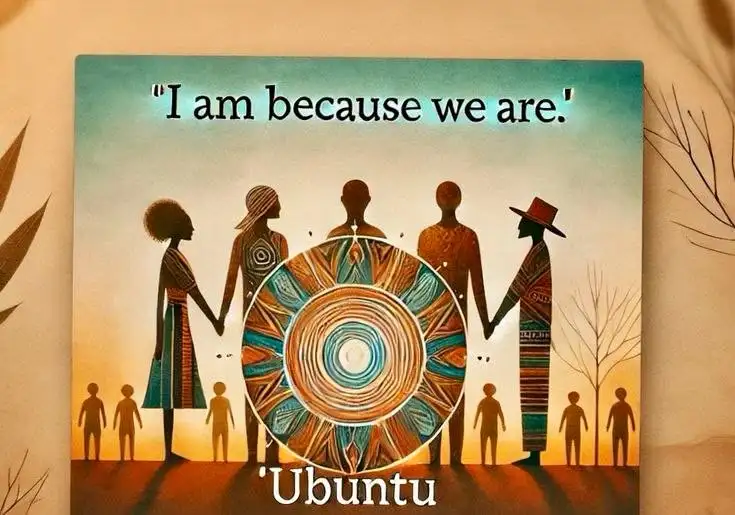
While some have historically attempted to paint Africa as a home to lawless societies, the continent actually possesses deep-rooted moral values that have endured for millennia. Among these is Ubuntu, a fascinating philosophy anchored in the principle of "I am because we are." Championing collective thinking over extreme individualism, Ubuntu views a human being as born formless like clay, requiring the community to use the fire of experience to mold them into a vessel that benefits society.
We do not enter this world fully formed; we learn to think, walk, and live as human beings through others. Crucially, the community takes responsibility for each of its members. In traditional practices, a wrongdoer is not isolated but placed in the center of the community, where people testify to their past good deeds.
This powerful concept of redemption teaches that humans are inherently good, and even when they stumble, they must be guided back to their true selves. It was this very foundation that inspired the African National Congress’s principle of redeeming rather than discarding its own, and it empowered Nelson Mandela to forgive his oppressors after dismantling Apartheid.
Equally transformative is the Ethiopian philosophy of Medemer, a concept that translates to synergy or coming together. Moving far beyond political calculations and temporary struggles for advantage, Medemer centers on holistic human dignity, the balance of nature, and shared coexistence. In this worldview, treating human beings as inanimate objects or mere tools for political gain is entirely unacceptable. Instead, it is guided by a deep moral supremacy that dictates we cannot be whole without each other, emphasizing that every individual plays an irreplaceable role in the completeness of society.
Medemer relies on the power of synergy, believing that a fusion of ideas, knowledge, and labor creates a capacity far greater than the sum of its isolated parts. It does not crush individuality but ensures that human differences serve as a vibrant societal adornment rather than a source of conflict.
Beyond social dynamics, Medemer embraces a profoundly naturalistic view of the world. Nature maintains its balance not through destruction, but by growing and accumulating new things upon what already exists. Following this law of interconnectedness, Medemer encourages adding new value onto a strong existing foundation and correcting mistakes through forgiveness, without destroying the hard-earned capital of past generations.
By rejecting the destructive mindset of zero-sum politics that has plagued societies for ages, it transforms contradictions into mutual victory. It acts as our era's compass for prosperity, pulling humanity out of the cycle of marginalization and inviting a societal healing based on reconciliation and mutual care.
The modern world is currently being ravaged by extreme individualism, the cutthroat spirit of capitalism, and an endless narrative of division. While global powers race to produce weapons of mass destruction, Ubuntu and Medemer bring the humane principles of sharing, caring, and understanding to the forefront. Redeeming instead of isolating the wrongdoer, and synergizing instead of widening our differences, are key solutions to solving our world's mounting political and social crises.
Now is the time for Africans to stop feeling ashamed of their history, to take immense pride in their identity, and to realize Pan-Africanism—an Africa enriched by its own capacity. The lion has finally started writing its story, and it is a magnificent chapter that promises to heal the world through humanity, forgiveness, and coexistence.