
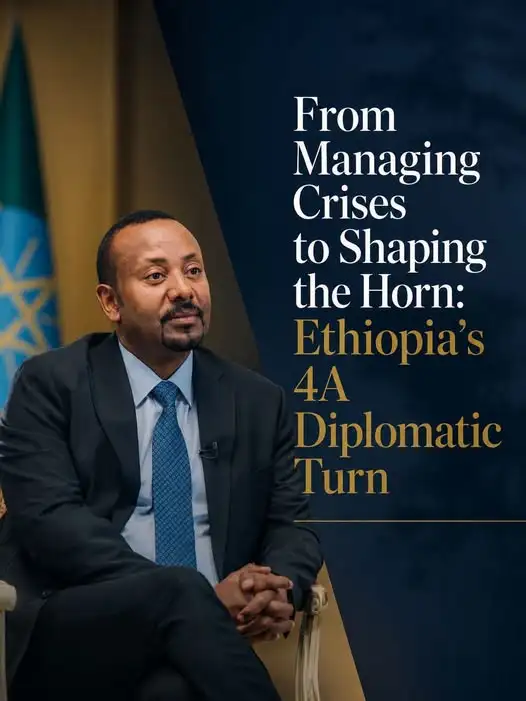
For years, Ethiopian foreign policy felt like a continuous game of defense, scrambling to contain regional crises, patch up strained ties, and react to decisions made by external players. Today, a striking shift is underway in Addis Ababa. Rather than merely adjusting to the stormy geopolitics of the Horn of Africa, Ethiopia is stepping up to redefine its role, pivoting from passive crisis management to an ambitious strategy designed to expand its own room to maneuver.
An analysis from the Institute of Foreign Affairs of Ethiopia conceptualizes this diplomatic evolution through four key tendencies: Active, Alternative, Adaptive, and Agenda-Setting. The active push is about taking the initiative rather than waiting on others, best illustrated by Ethiopia placing its desire for Red Sea access directly back onto the regional agenda through its Memorandum of Understanding with Somaliland.
Alongside this proactive stance, Ethiopia is cultivating alternative routes to resolve disputes. By leaning into fresh channels like Turkish mediation under the Ankara Declaration to address tensions with Somalia, Addis Ababa is diversifying its partnerships and avoiding reliance on any single international gatekeeper.
This approach also leans heavily on strategic flexibility. In a turbulent neighborhood shaped by the war in Sudan, heightened naval operations in the Red Sea, and expanding Gulf state influence, adaptive diplomacy allows Ethiopia to adjust its tactics while keeping its core national interests fixed.
At its most ambitious level, this framework aims to set the regional agenda itself. Instead of framing its search for sea access as a clash with neighboring states, Ethiopia is attempting to reframe the issue around shared economic connectivity, transforming a potential point of friction into a broader conversation about regional integration and maritime security.
Yet, this outward-looking ambition faces its ultimate test at home. The ability to project strength abroad depends entirely on internal political bandwidth and stability, making the full consolidation of the Pretoria Cessation of Hostilities Agreement following the Tigray conflict vital. Maintaining internal peace and keeping domestic disputes within political channels gives the government the focus, credibility, and resources needed to sustain a complex foreign policy.
Ultimately, if Ethiopia can pair its diplomatic creativity with lasting domestic stability, this strategy could evolve into a permanent blueprint for statecraft, cementing the nation’s transition from reacting to regional crises to actively shaping the future of the Horn.