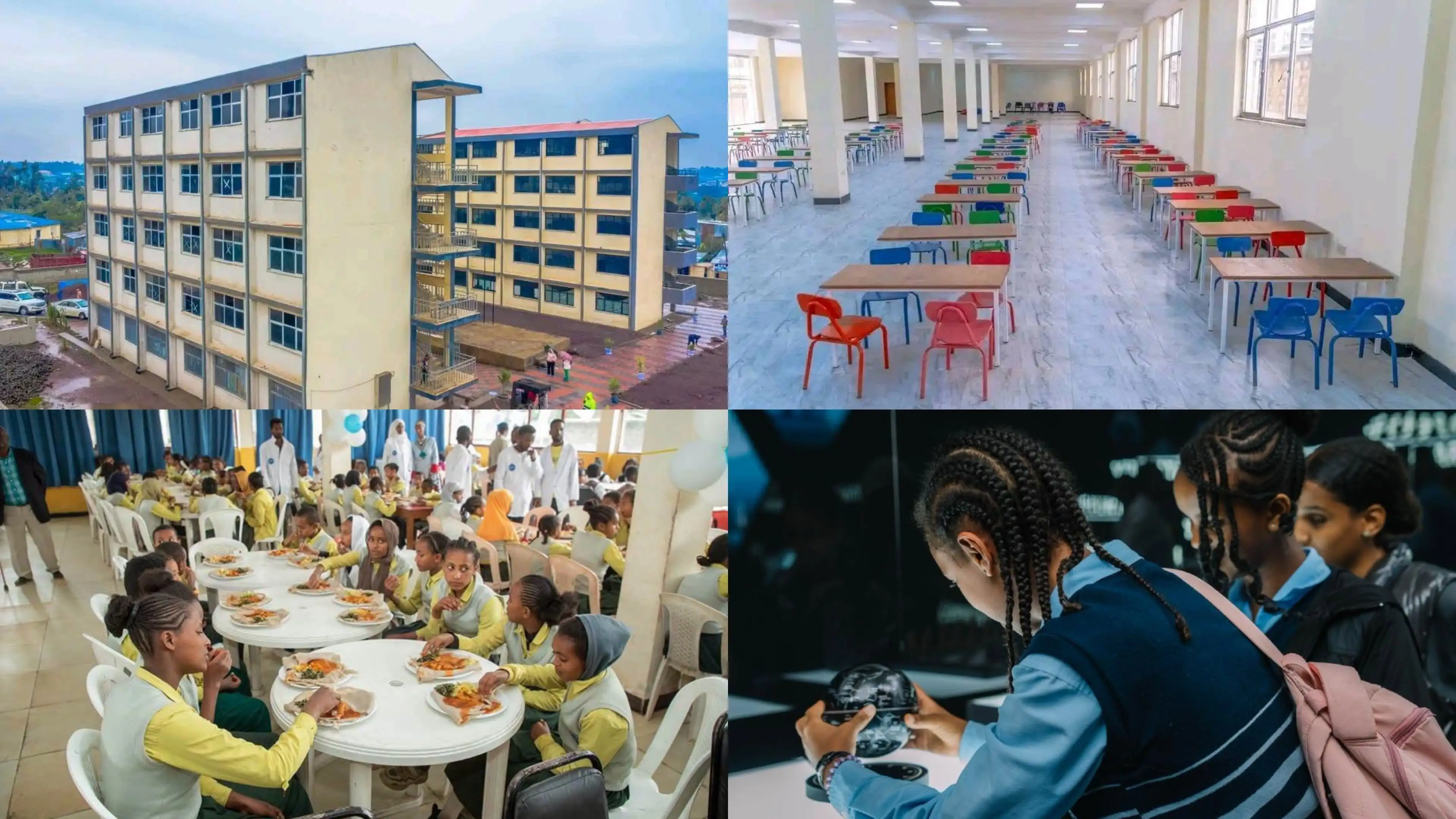
Education remains the cornerstone of any nation’s long-term development and comprehensive prosperity. In Ethiopia, where the education system has historically struggled with deep-seated structural challenges, the government is working to reposition learning as a vital bridge toward national unity, economic growth, and human potential. Through its current reform agenda, the administration is treating education as the single most critical tool for shaping a capable and resilient populace.
To drive these changes, Ethiopia launched a broad education and training roadmap designed to pivot the system from simply expanding access to dramatically improving classroom quality. Replacing a policy that had remained static for 28 years, this undertaking marks a historical milestone by establishing the nation's first General Education Proclamation and a formal competence framework.
These wide-ranging reforms are already yielding promising returns across the academic landscape. Among the most significant shifts is a overhaul of national examination procedures, which has restored academic integrity by eliminating a longstanding culture of cheating and encouraging student self-reliance. Recognizing that lasting educational success must be built from the ground up, major priority was placed on early childhood development. The construction of more than 35,000 new kindergartens has pushed pre-primary enrollment from 36.7% up to 59.8%.
This expansion continues into primary and secondary education, where thousands of new schools and additional classrooms have been built. Through the nationwide "Education for a Generation" movement, efforts to upgrade school standards and accelerate infrastructure development have picked up momentum. In tandem, a comprehensive school feeding program now reaches over 8 million students, significantly reducing dropout rates while providing immense relief to families. On the technological front, guided by the "Digital Ethiopia 2025" initiative, secondary schools nationwide are being outfitted with computer laboratories and internet access.
Higher education is undergoing a similar transformation. Public universities are being differentiated by specific institutional missions as they transition toward autonomy, while mandatory exit examinations have been introduced to verify the readiness and competence of graduates. Today, nearly 27 million general education students and more than 828,000 higher education students are actively enrolled in classes.
Looking forward, state targets focus on achieving 100% participation in pre-primary and primary education, expanding specialized support centers for students with special needs, and optimizing student-to-classroom ratios. Setting its sights on "Digital Ethiopia 2030," the nation is actively preparing to integrate artificial intelligence into the core curriculum, aiming to propel the sector into its next wave of modernization.
Fully realizing these ambitious initiatives will require a sustained, collective effort across every layer of society. While the government maintains rigorous oversight of infrastructure and digital projects, teachers and administrators are tasked with carrying out the new roadmap with commitment.
Ultimately, parents, local communities, and the private sector must continue backing nationwide educational initiatives, proving that building the foundation for tomorrow's Ethiopia remains a shared national responsibility.