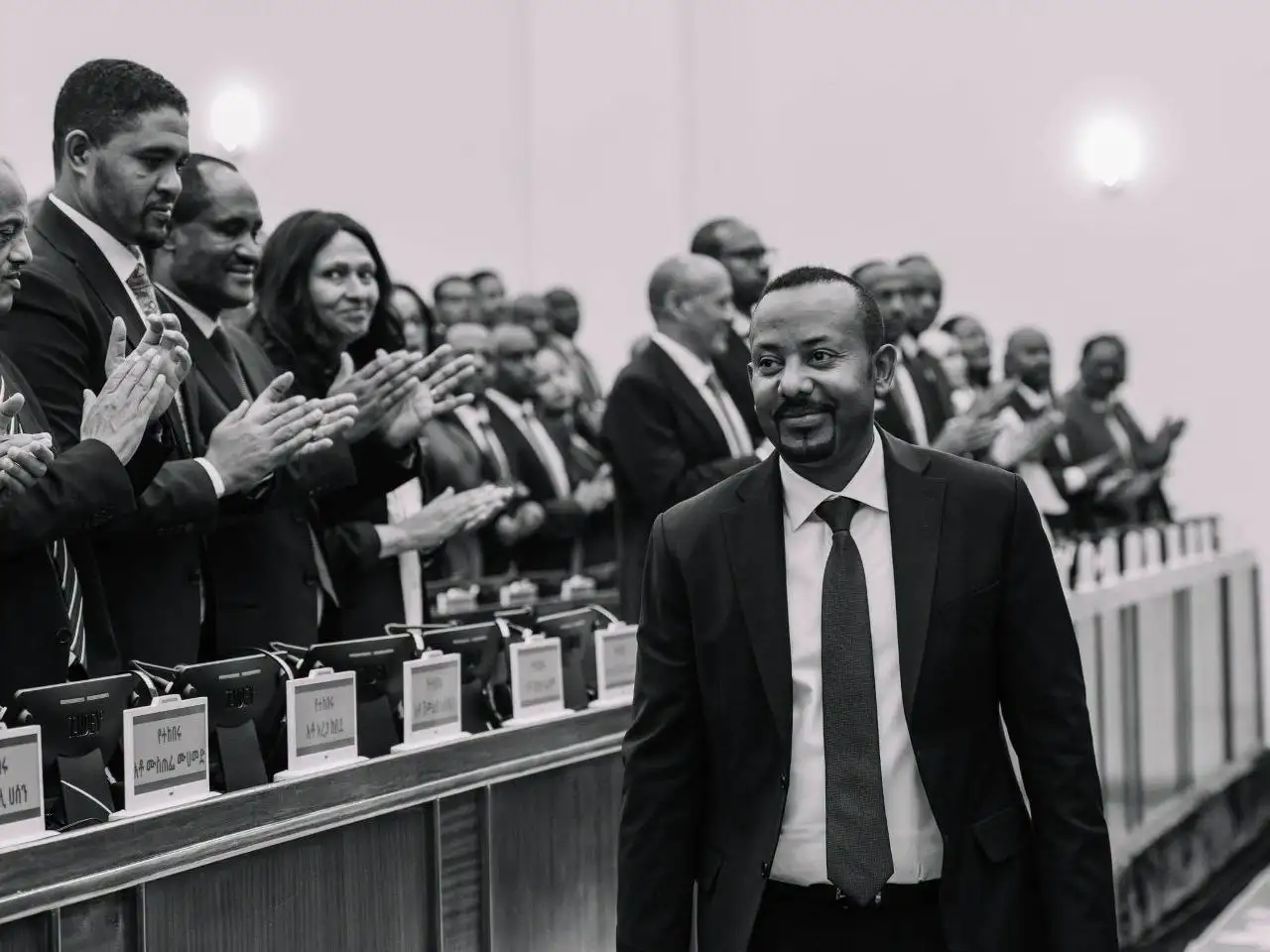
Ethiopia has officially broken away from decades of reliance on a single economic sector, executing a sweeping transition toward a diversified economy powered by agricultural expansion, urban renewal, and industrial growth. Prime Minister Abiy Ahmed (PhD) announced that traditional economic growth models could no longer deliver rapid national transformation, prompting his administration to abandon the approach of placing all economic eggs in one basket. By shifting to a multi-sector strategy, ongoing structural reforms across macroeconomics, agriculture, manufacturing, energy, health, and education are now yielding measurable results.
The agricultural sector has seen massive gains through the Green Legacy Initiative, which has planted 56 billion seedlings to restore degraded land and halt soil erosion. At the same time, summer irrigation programs have fundamentally altered wheat and rice production. Highlighting these milestones during his address to the newly formed parliament, PM Abiy noted that Ye Lemat Tirufat initiative has also expanded dairy, poultry, and egg outputs to bring the country closer to full food self-sufficiency. Industrial manufacturing has expanded under the Made in Ethiopia movement, while mining activities have delivered a fast boost to national exports.
Urban landscapes are undergoing a dramatic makeover as well. Corridor development projects exposed past urban decay, where overcrowded, service-starved neighborhoods passed as cities, and converted them into modern, conference-ready hubs. Combined with digital identity rollouts through the Fayda system, riverfront developments, and the Dine for Ethiopia tourism initiatives, PM Abiy noted that the nation is earning its reputation as the true flower of Africa through tangible work rather than hollow praise.