
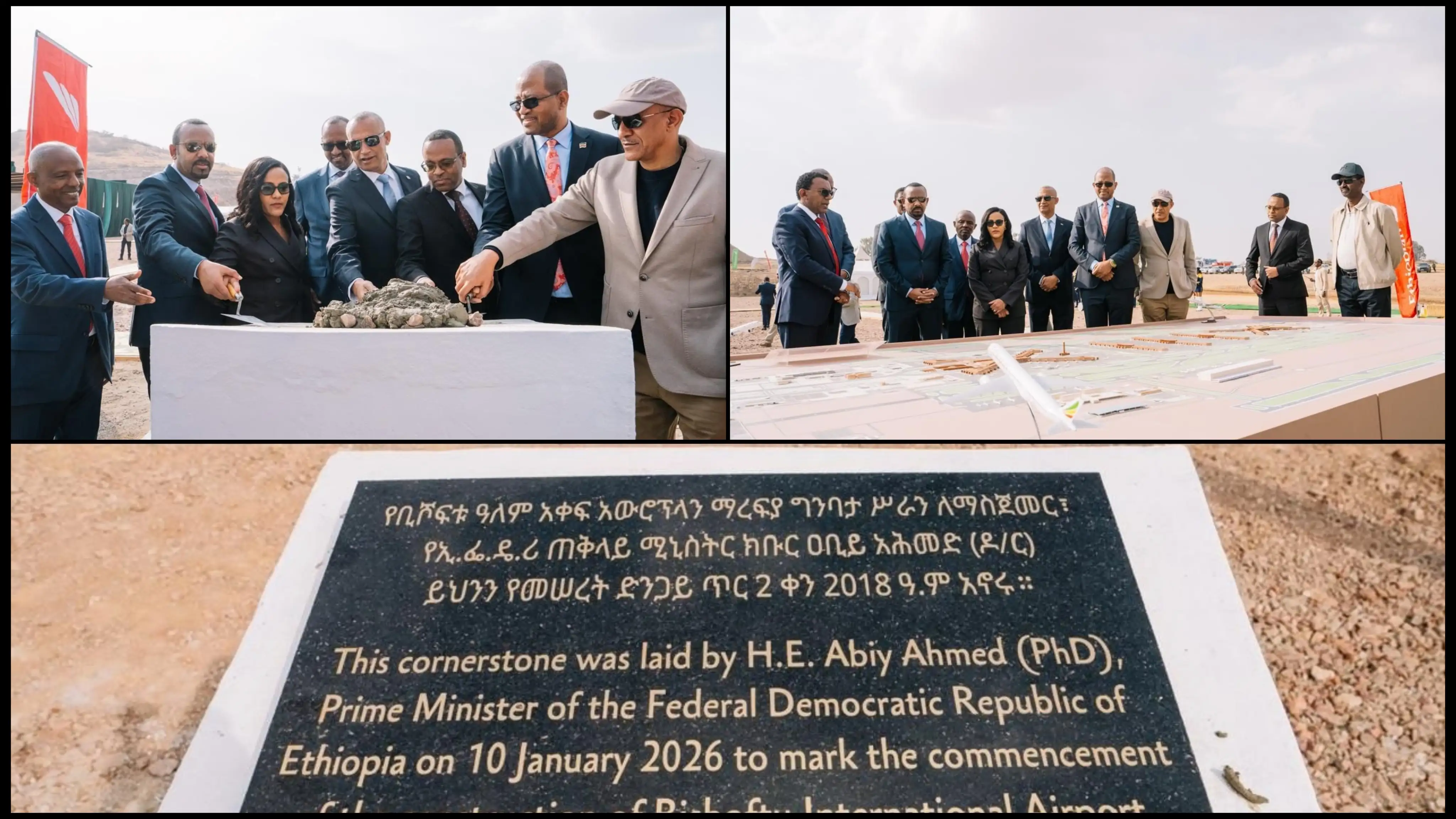
Prime Minister Abiy Ahmed officially launched the construction of Ethiopia’s new mega-airport today, laying the cornerstone for a project designed to transform the nation into a premier global aviation hub. The ceremony marks the start of a multi-billion dollar development intended to triple the country's current passenger capacity and solidify its position as the gateway to Africa.
This development comes as Addis Ababa Bole International Airport nears its expanded capacity of 25 million passengers annually. This multi-airport strategy is designed to future-proof Ethiopia’s role as Africa’s leading air transport gateway.
Bishoftu International Airport (BIA) is set to become the largest aviation infrastructure project in Africa’s history, aligning with Ethiopia’s national economic reforms, industrialization agenda, and long-term aviation strategy. The Prime Minister emphasized that the project will strengthen the global competitiveness of Ethiopian Airlines, enhance continental connectivity under the AfCFTA framework, and expand trade and tourism corridors to position Ethiopia as a premier intercontinental hub.
The site is located approximately 40 km southeast of Addis Ababa at an altitude of 1,910 meters, providing optimal conditions for aircraft performance and the efficient handling of both transit and origin-destination passengers. Its proximity to the capital ensures a seamless integration with the existing aviation ecosystem. The first phase of the airport is designed to handle 60 million passengers per year, with an ultimate master plan capacity of 110 million passengers annually, placing Ethiopia among the world’s top aviation hubs.