By: Fistum Getachew
The plenary session of the Ethiopian National Dialogue conference marked the conclusion of the conference that took part at the Addis Ababa International Convention Center in Addis Ababa from 15th July to 22nd August, 2026.
The National Dialogue Commission which prepared this event at the conclusion of a long and tortuous journey throughout the country gathering the agendas and the representatives of Ethiopians from all walks of life including the diaspora finally reached the apex of its mission. It was a daunting task that lasted four years across all sorts of weathers and social conditions throughout the more than a thousand districts and woredas all over the country. It had a multitude of challenges from the very beginning when it was officially and legally formed through a proclamation and prepared the scope and depth of its task.
The Commission was challenged by certain diffident groups and political forces especially using the social media and tried to depict is as a creation of the ruling party that would serve for its own political objectives. But the selection and appointment of the leaders of the Commissions have shown that the truth is far from what was being widely disseminated. And it was intended to discredit the work of the Commission and make it valueless. However with the wide participation of Ethiopians of all walks of life including political parties, civic organizations, religious leaders, academics, and associations of people with disabilities etc has testified to the value and appreciation of the work of the Commission.
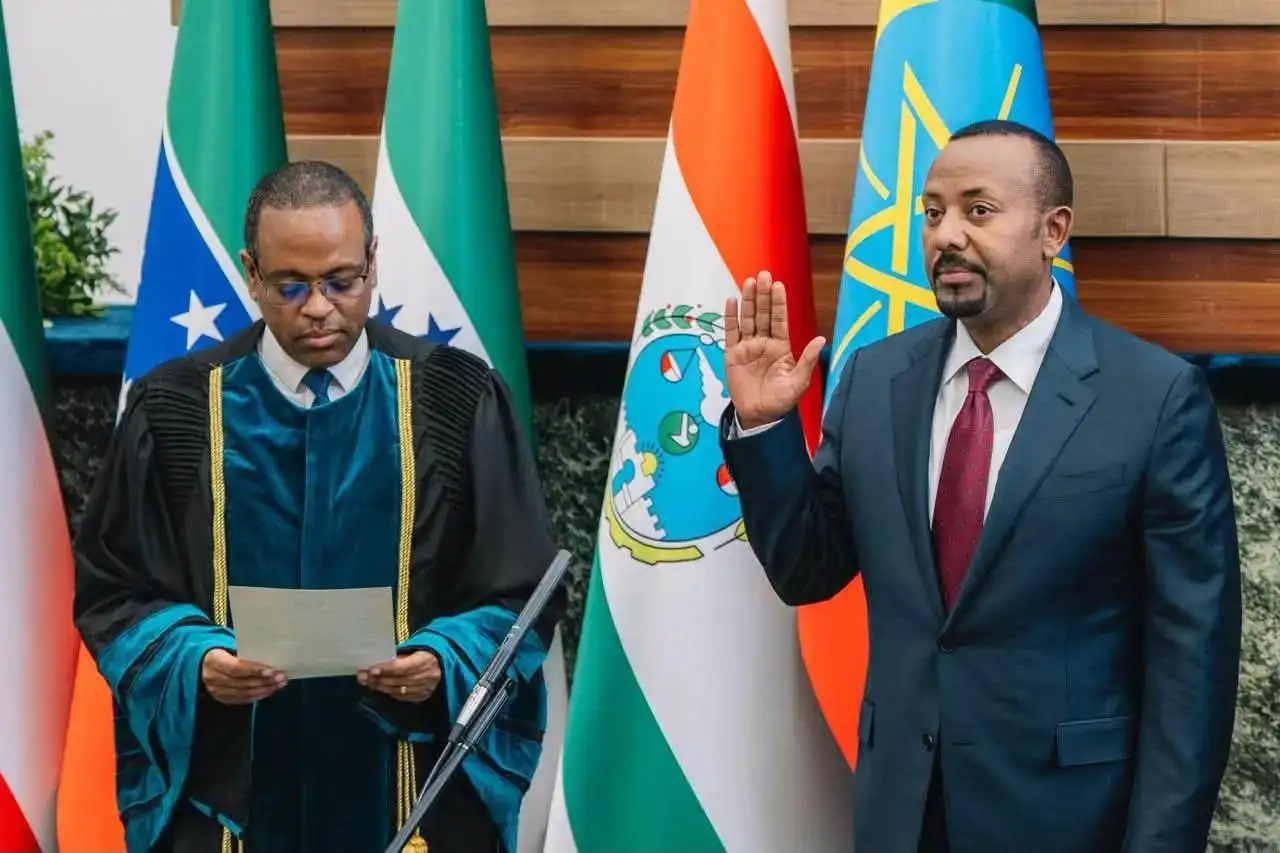
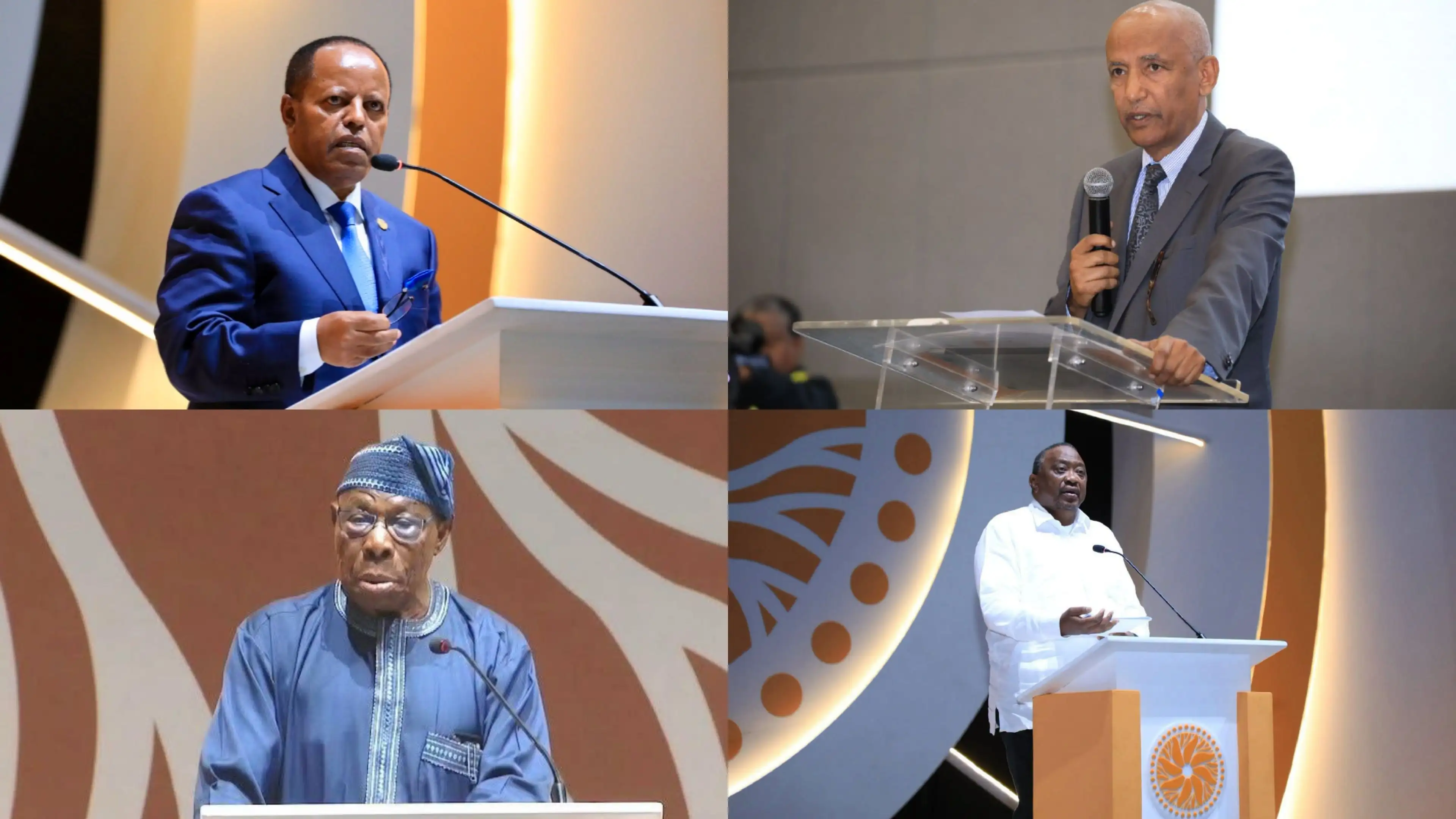
The closure of the Conference was carried out through a grand ceremony attended by the President of the Federal Democratic Republic of Ethiopia Taye Atske Silassie, other high level government officials, local and international organisations and agencies’ leaders, ambassadors resident in Addis, invited guests but also most notably former presidents of Nigeria Olusegun Obasanjo and Kenya’s Uhuru Kenyatta.
On the occasion, several speeches were heard regarding the importance and significance of the National Dialogue and the process that it underwent until the final moments when the closure was celebrated as a huge success opening a new chapter for the country but also susceptible of having impact even outside Ethiopia. In fact, the process was closely watched of many international bodies and representatives of several international media outlets through their correspondents.
Among those who addressed the august assembly were of course the Commissioners of the National Dialogue, the President of the Federal Republic, the Speaker of the House of Peoples Representatives and even more remarkably the former Presidents Obasanjo and Uhuru Kenyatta. In all the speeches there were statements that sparked new hope for the future of the country by adopting dialogue as part of the way forward for any disagreements or disputes on any number of socio-economic and political issues, instead of resorting to force and violence.
In his intervention, President Taye Atske-Selassie characterized the National Dialogue Conference as a historic step toward enhancing national cohesion, highlighting the role of dialogue in tackling the nation's challenges. During the closing ceremony in Addis Ababa, he praised the participation of thousands from various political, social, ethnic, and regional backgrounds, who engaged in significant discussions on critical national issues. President Taye noted the dialogue's foundation in reason, transparency, and mutual respect, facilitating a platform for hearing diverse viewpoints and trying to find common ground.
Taye emphasized that the conference showcased Ethiopia’s diversity and illustrated the country’s strength in uniting varied communities through peaceful dialogue. The President commended the Ethiopian National Dialogue Commission for its successful facilitation. He officially commended Prime Minister Abiy Ahmed (PhD) for transforming national dialogue into a structured nationwide endeavor. He underscored that making consultation integral to nation-building requires courage and character to face truths directly.
President Taye expressed that the impact of the process extends beyond the conference's end, fostering a culture of calm dialogue which is vital for sustainable solutions. He asserted that the dialogue’s legacy lies not only in its recommendations but also in cultivating listening, tolerance, and consensus as institutional norms. According to the president as the conference concludes, it marks the beginning of a phase focused on implementing its recommendations into practical reforms to enhance Ethiopia's long-term peace, stability, and unity.
Similarly House of Peoples’ Representatives Speaker Tagesse Chaffo hailed the National Dialogue conference as a historic event that aimed to tackle long-standing national issues through inclusive dialogue and consensus. Celebrating its successful conclusion, the Speaker emphasized the conference as a pivotal moment where diverse societal segments engaged in discussions to shape Ethiopia's future.
The Speaker highlighted the importance of dialogue over conflict, asserting it as a means to address Ethiopia’s challenges peacefully. Tagesse stressed the need for collective ownership of these outcomes by Ethiopians and called for action to ensure peace and prosperity for future generations. He also expressed gratitude to all contributors who made this historic process successful.
On a similar note that underlined the significance of the conference, Chief Commissioner of the National Dialogue Commission Professor Mesfin Araya addressed the audience stating that the historic conference has brought a shared national vision to the fore, with Ethiopians from diverse backgrounds demonstrating their commitment to addressing national challenges through consultation and collective understanding.
Professor Mesfin said the dialogue had demonstrated in practice that there is no national challenge Ethiopia cannot address through consultation. He said consultation is the only way to resolve the country’s challenges, emphasizing that the historic national dialogue has provided a platform for Ethiopians to deliberate on issues of national importance and seek common solutions.
The Chief Commissioner recalled that 4,000 representatives of Ethiopian citizens had spent the past 46 days deliberating on eight major agenda areas, describing their sustained engagement as a significant achievement.
He said the historic process had brought a collective vision of “ours” to the forefront, rather than an outlook centered on “mine,” while demonstrating the strength of Ethiopia’s unity.
The representatives, drawn from different sections of society and parts of the country, demonstrated remarkable commitment by sustaining their deliberations over an extended period, he said, describing their continued engagement as a major success.
Although the dialogue process encountered differences of opinion, disagreements and logistical challenges, the participants continued their deliberations in a spirit of listening and with Ethiopia at the center of their discussions, Professor Mesfin said. He described this as a major achievement and a source of optimism. After all, there has always been a long tradition among Ethiopians of settling disputes and differences or disagreements in any social milieux through dialogues and discussions in which the elderly, experienced members of communities as well as religious leaders take part and validate the process to make it acceptable to all parts.
The Chief Commissioner stressed that dialogue is not a process that begins and ends in a single day, announcing that the agendas and decisions identified through the conference will continue to be deliberated on in the regions and city administrations.
He further emphasized that Ethiopia can resolve its challenges through dialogue, noting that victory cannot be achieved through weapons. True victory, he said, is realized through the shared success of dialogue.
Likewise Deputy Commissioner Hirut Gebre Selassie said the National Dialogue Commission has successfully laid a historic foundation to resolve deep-seated grievances and political differences through dialogue rather than force. Hirut stated that the event opens a new chapter in Ethiopia's political and social history.
"We have opened a new historical chapter that enables us to solve deep-rooted disagreements, historical fractures, and differences of opinion through civilized consultation rather than by force and guns," Hirut said.
Hirut emphasized that while discussions involved sharp differences of opinion, the true success of the process lies in the delegates' ability to listen to one another, uphold mutual respect, and seek shared solutions.
"The greatest achievement is not merely the compiled set of recommendations, but the fact that we have laid the foundation for a culture of resolving differences through dialogue," the Deputy Commissioner added.
The Commission expressed confidence that the resulting recommendations will be implemented by the government and relevant stakeholders to guide Ethiopia toward a peaceful and inclusive future.
The closing ceremony capped 40 days of continuous deliberations aimed at addressing selected key national issues. The conference convened more than 4,000 delegates representing diverse societal sectors, political organizations, institutions, government bodies, prominent figures, former combatants, and the diaspora.
Discussions throughout the 40-day event focused on eight core agenda areas: nation-building; state structure, governance, and political and electoral systems; special administrative affairs regarding Addis Ababa and Dire Dawa; and religious affairs, historical grievances, and national reconciliation.
Furthermore, it was also learnt that the delegates engaged in deliberations covering institutional building, the rule of law, and human rights; socio-economic affairs, including issues impacting farmers and pastoralists; anti-corruption measures and good governance; as well as peace building and national conflict resolution.