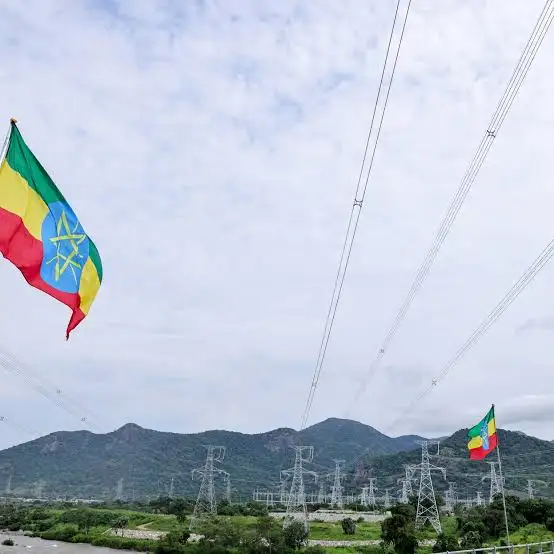
Hundreds of feet above the rift valleys and scrublands of East Africa, high-voltage transmission lines are quietly redrawing the political map of the region. As Ethiopia ramps up electricity generation from its colossal mega-dams, the nation is no longer just lighting up neighboring homes, it is weaving its neighbors into a shared energy grid that could alter the Horn of Africa's diplomatic playbook for generations.
By locking countries like Kenya, Djibouti, Sudan, and Tanzania into long-term supply contracts linked by heavy steel interconnectors, Addis Ababa is securing something far more durable than temporary diplomatic goodwill. It is establishing a structural reliance that binds the economic stability of surrounding capitals directly to Ethiopian power stations.
Analysis by the Institute of Foreign Affairs describes this phenomenon as "latent energy leverage." It is a subtle form of influence that operates without high-handed threats or political ultimatums. When a country like Kenya relies on Ethiopian hydro-power for the overwhelming majority of its energy imports, keeping the peace and protecting cross-border infrastructure transforms from a warm diplomatic gesture into an urgent matter of national security.
This shift represents a masterclass in infrastructure statecraft. Unlike treaties, which can be torn up at the onset of a geopolitical dispute, thousands of miles of high-voltage lines running across international borders are practically impossible to replace overnight. With its total generating capacity reaching roughly 10,000 megawatts, Ethiopia's electrical grid has become its most enduring foreign policy asset.
Yet this strategic advantage is not without its limitations. Turn the switches off as a political weapon, and Ethiopia risks destroying its own reputation as a reliable partner while burning a massive hole in its foreign-exchange revenues. Importing nations also retain choices, including the option to invest heavily in domestic solar, wind, or geothermal power. Rather than giving Addis Ababa the power to dictate policy to its neighbors, the grid creates a soft, cumulative incentive for surrounding capitals to avoid prolonged confrontation and keep regional trade flowing smoothly.
The delicate nature of this relationship is nowhere clearer than in war-torn Sudan, where damaged infrastructure and economic turmoil threaten cross-border power flows. In such unstable environments, the energy web constrains the exporter as much as the importer, forcing Ethiopian authorities to focus on protecting physical assets rather than extracting political concessions from a neighbor in crisis.
To keep this regional advantage intact, strategists argue Ethiopia must navigate its position carefully. That requires aligning foreign policy with energy management without over-politicizing daily trade, ensuring domestic electricity access keeps pace with exports to prevent local backlash, and strengthening regional bodies like the Eastern Africa Power Pool to guard against sudden disruptions. Ultimately, Ethiopia’s true strength does not lie in the threat of plunging its neighbors into darkness, but in making partnership with Addis Ababa too indispensable to give up.