
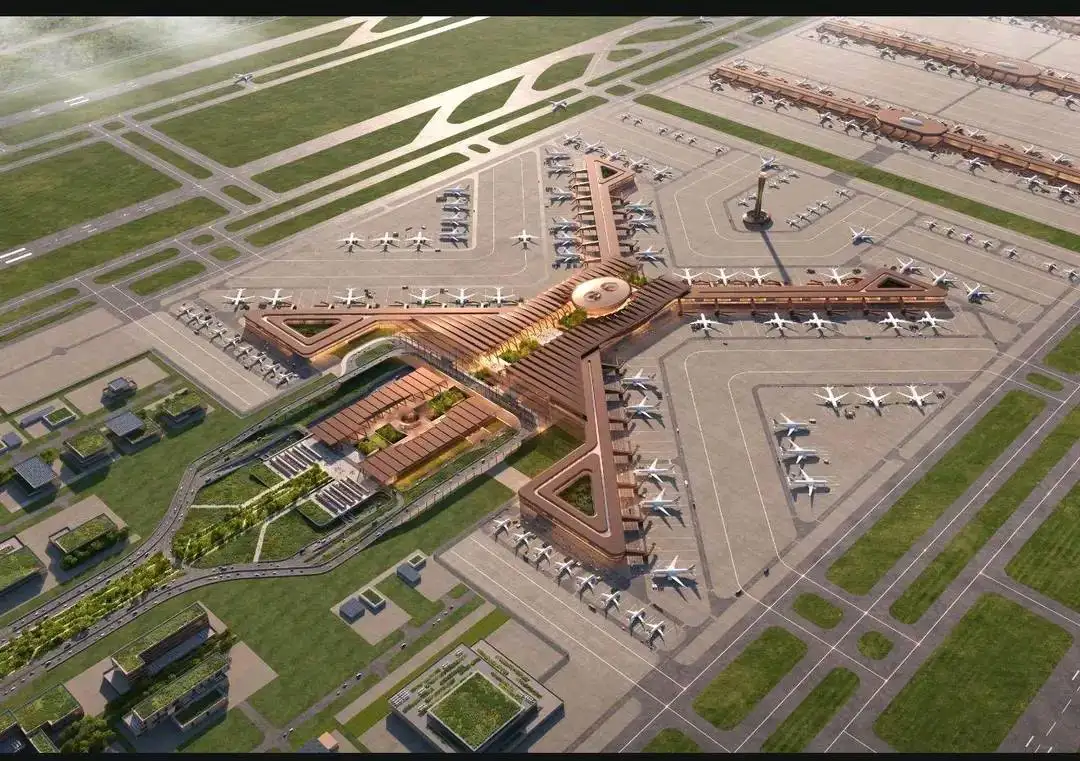
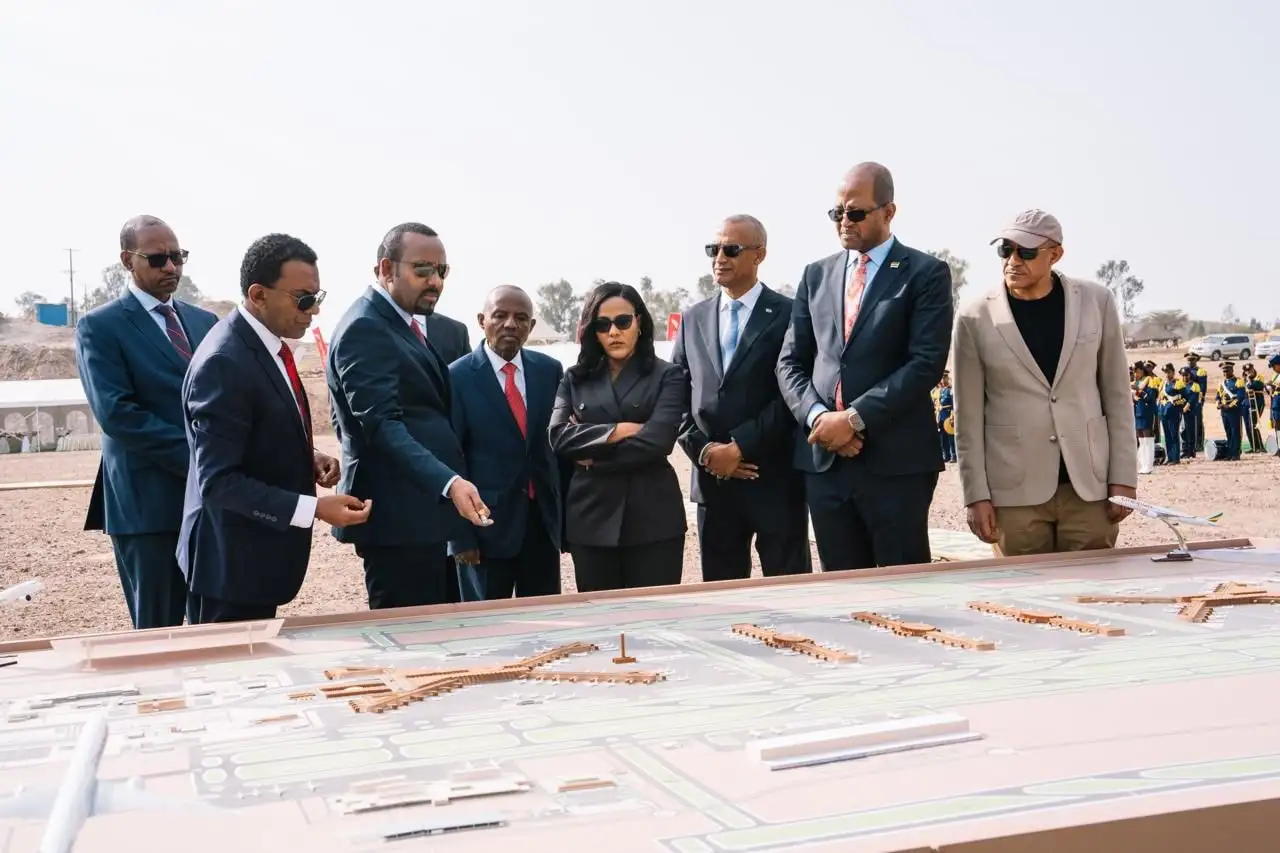
It is to be recalled that Ethiopia unveiled the full-scale development of the Bishoftu International Airport. It is a $12.5 billion "Mega Airport City" designed to serve as the primary engine for African trade and the world's most advanced connection point between continents.
Designed by the prestigious Zaha Hadid Architects and Sidara (Dar Group), this project is set to become one of the top 10 largest airports in the world and the undisputed leader in Africa. Fully owned by the Ethiopian government through Ethiopian Airlines, the project is financed via a 20% stake from the airline and 80% through loans from the African Development Bank and other international lenders. Spanning a massive 5,000 hectares, the airport will eventually handle 95% of Ethiopia’s international traffic, allowing the current Bole International Airport to transition exclusively to domestic operations. The architectural marvel features an X-shaped terminal inspired by Ethiopia’s mountainous landscape, traditional Mesob basketry, and the Great Rift Valley, utilizing high ceilings and an open layout for natural ventilation to replace mechanical cooling.
The airport’s capacity is staggering, designed to accommodate 110 million passengers annually and connect directly to 150 cities, with a layout ensuring no traveler walks more than 600 meters to their gate. It will function as the heart of the African Continental Free Trade Area (AfCFTA) with a 3.7-million-ton annual cargo capacity, supported by specialized cold storage for meat and flowers and a dedicated agro-processing park for local farmers. Connectivity is a core priority, with a 12-lane highway and a 38 km high-speed rail line (200 km/h) featuring an underground station beneath the terminal. Beyond transport, it will create over 50,000 jobs, transforming Bishoftu into a global business hub.
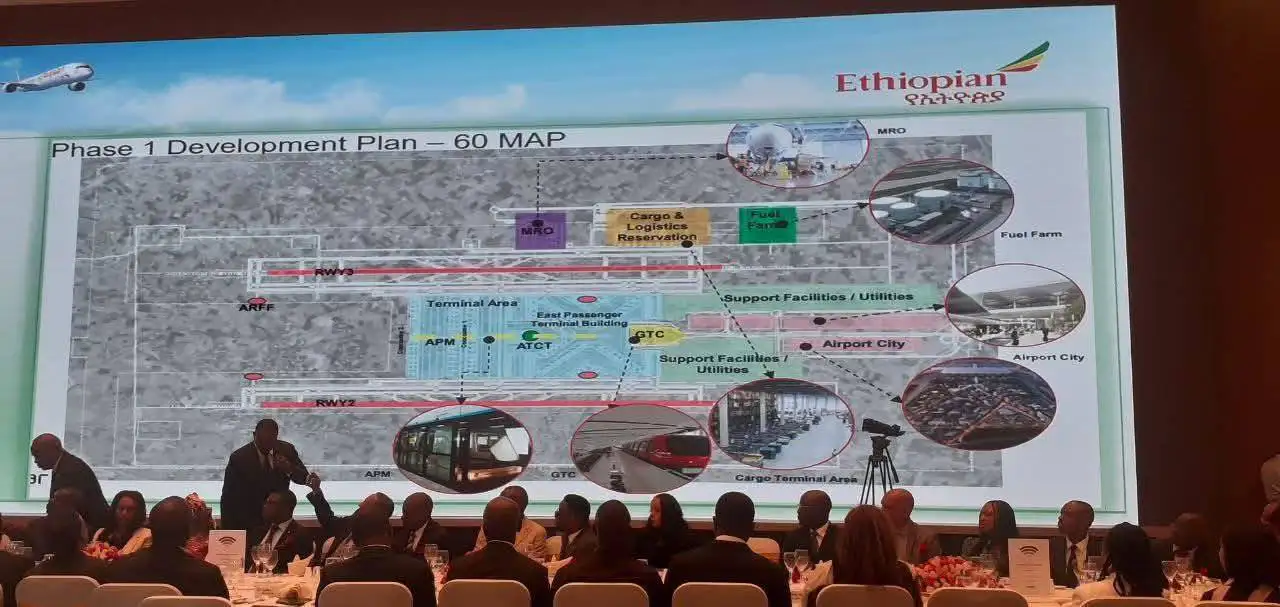 Technologically, the airport is a fortress of innovation, employing AI-assisted digital control towers, biometric facial recognition, and a dedicated Cyber Security Technology center to protect flight data. Passengers will experience an AI-powered baggage tracking system and fully mobile-integrated processing. Sustainability is built into the foundation, with a massive solar farm providing 50% of the airport's electricity and a modern rainwater harvesting system for sanitation, all while strictly adhering to ESIA and ESMP standards to protect the biodiversity of the Bishoftu lakes. The interior is a world unto itself, housing five-star Airside Hotels, 20+ VIP lounges, an aviation museum, indoor indigenous gardens, and a cultural handicraft center. With a 15-day independent fuel reserve, an emergency-only runway, a world-class Aviation University, and a massive MRO maintenance hub, this 24/7 construction project stands as the backbone of Ethiopia’s 2040 vision—a "bridge of the century" that cements the nation’s status as a global leader in tourism and logistics.