
Egypt’s recent frantic water-centric maneuvers clearly indicate that the false narrative it has used to delude itself for centuries is finally coming to an end.
As Cairo’s schemes fail to hold water on the diplomatic stage, it is squandering its time scrambling to forge new military and security alliances based in the Horn of Africa.
These recent actions appear to be a desperate, last-ditch effort to maintain an outdated and crumbling hydro-hegemony through manipulation and deceit.
However, this approach ignores one fundamental truth: Ethiopia’s natural and sovereign right to utilize its own resources is an irreversible reality.
The Nile River is globally recognized as a cradle of civilization. Yet, Ethiopia, the source of 85 percent of this great river's waters, has historically been marginalized from its own resource by a deeply skewed narrative. This stands as a profound example of how distorted narratives can manipulate history.
The phrase "Egypt is the gift of the Nile," coined by the Greek historian Herodotus over 2,500 years ago, laid the foundation for alienating the river from its source and framing Egypt as its sole proprietor.
Egypt adopted this fabricated tale as an absolute truth, deluding itself into believing it could exclusively control the Nile without Ethiopia's consent. It has sustained this fallacy by passing down the same distorted narrative through generations.
This historical distortion eventually permeated legal and political structures, paving the way for colonial-era agreements. Consequently, the 1929 Anglo-Egyptian treaty, which stripped upper riparian countries of their rights, and the 1959 agreement, which exclusively divided the river's annual flow between Egypt and Sudan, were signed. These treaties entirely excluded Ethiopia, rendering it an outsider to its own river.
Reflecting on the profound diplomatic pressure caused by this historical bias, Prime Minister Abiy Ahmed (Ph.D.) once remarked that the hardest fact to explain to world leaders was that the Nile actually originates in Ethiopia. This highlights how global leaders, heavily influenced by academic literature and global media, had been fed information that tied the Nile exclusively to Egypt.
Egypt has deliberately framed the Nile issue as an "existential threat." Consequently, when Ethiopia began constructing the Grand Ethiopian Renaissance Dam (GERD) to provide electricity for its more than 130 million citizens, Egypt left no stone unturned to disrupt the project. It did so by falsely portraying Ethiopia's legitimate development efforts to the international community as a security threat capable of plunging the region into crisis.
Beyond diplomatic sabotage, a primary strategy of Egypt has long been to destabilize Ethiopia's internal peace to prevent it from exercising its right to use the Nile. By financing and training elements to cause internal unrest and inciting military tensions along our borders, Egypt has historically hindered Ethiopia, forcing the nation to grapple with conflict and poverty instead of focusing on water development. Egypt's recent touring of the Horn of Africa is merely an extension of this backward strategy of perpetuating a cycle of regional crisis.
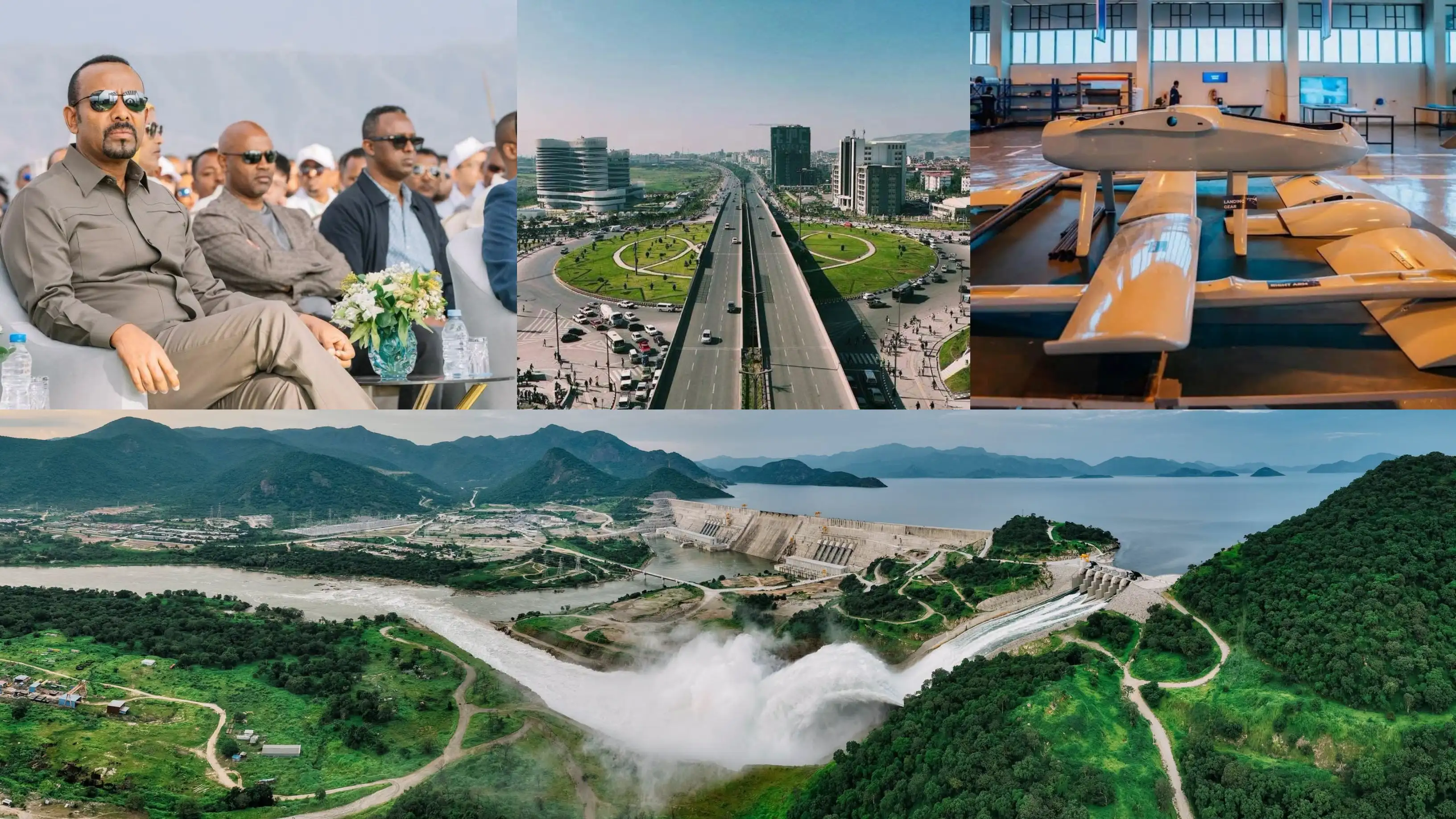
The successful construction and water filling of the Grand Ethiopian Renaissance Dam represents much more than the completion of a mega-project for Ethiopians; it is a monumental reaffirmation of national sovereignty, returning true history to its rightful owners.
Although Egypt’s relentless pressure on international financial institutions historically blocked Ethiopia from securing external funding, the dam was built entirely through the capacity and resources of Ethiopians, standing today as a towering symbol of independence.
Egypt's current approach of intimidation and attempting to exert new pressure through neighboring states is a futile endeavor to repair its shattered hydro-hegemony, which was decisively dismantled by the realization of the GERD.
The Grand Ethiopian Renaissance Dam has not only neutralized the age-old distorted narratives surrounding the Nile, but it also marks a new chapter for current generation—one where undeniable reality stands tall in triumph.
Ethiopia continues to advocate for mutual benefit and regional cooperation. However, it is imperative that Egypt wakes up from its world of illusion and embraces this new reality.