For years, the global consensus was clear: Ethiopia could not produce its own vaccines. That era of skepticism officially ended today as Prime Minister Abiy Ahmed (PhD) declared a new chapter in the nation’s quest for "pharmaceutical sovereignty," setting a bold five-year deadline to achieve 100% self-sufficiency in medical production.
The Prime Minister’s vision centers on a simple but powerful premise: a nation that cannot produce its own food, clothing, and medicine cannot truly claim to be sovereign. By linking health security directly to national independence, the government is framing this shift not just as a medical milestone, but as a critical pillar of Ethiopia's survival.
The 8% Wake-Up Call
The journey to this moment was accelerated by the hard lessons of the COVID-19 pandemic. At the height of the global crisis, Ethiopia was producing a mere 8% of its own medicine, leaving the nation vulnerable to international supply chains and charity.
Refusing to let the crisis go to waste, the government launched a massive industrial push. Today, that figure has jumped to 44%, with expectations to hit 55% in the coming weeks as new factories come online. The ultimate goal? To reach 100% production within the next five years, mirroring successes already seen in the food and textile sectors.
Ending the "Can't Produce" Myth
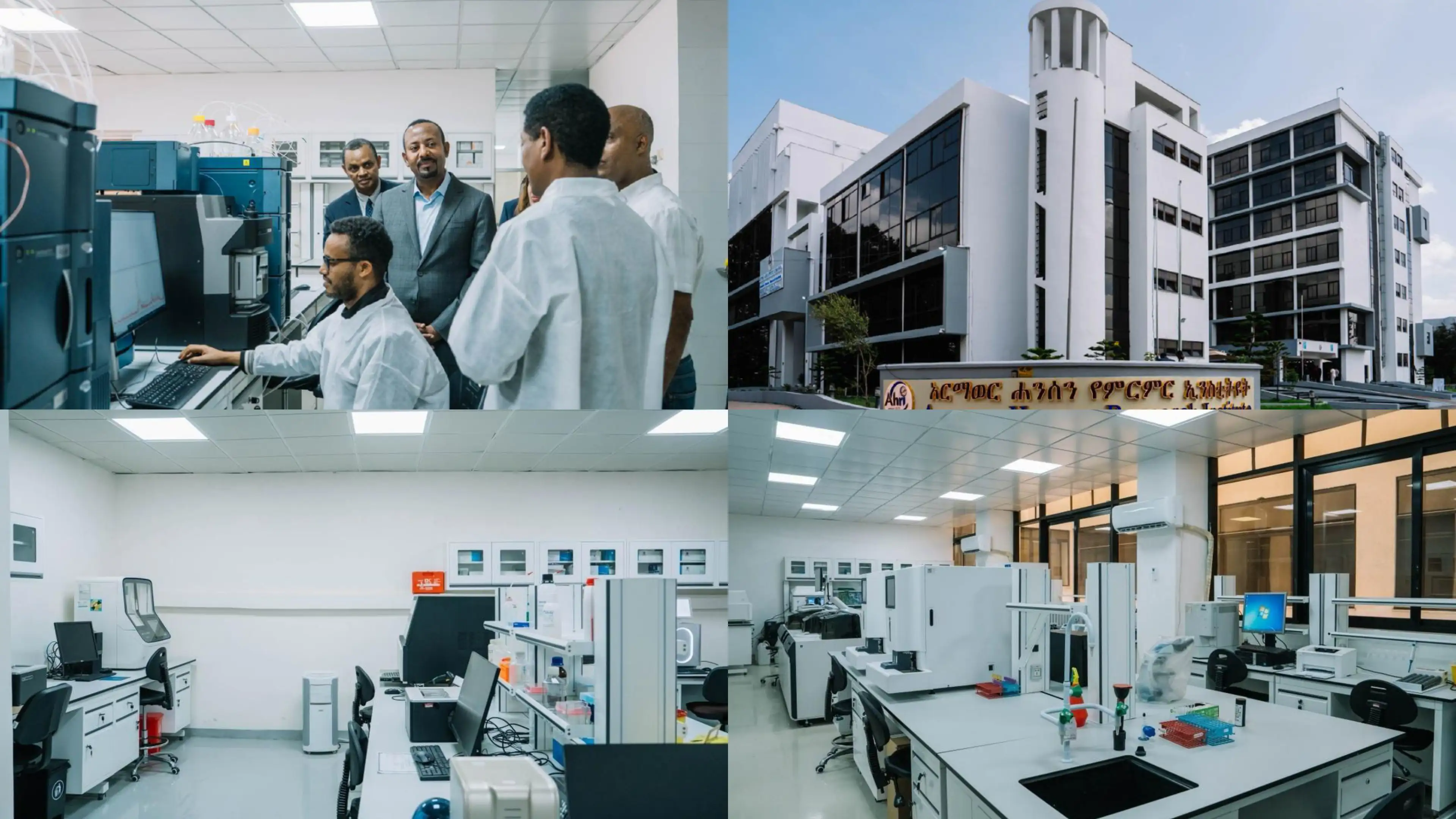
The centerpiece of this transformation is a sophisticated new research hub at the Armauer Hansen Research Institute (AHRI). For a long time, partnership requests from Ethiopia were dismissed by international actors under the assumption that the country lacked the infrastructure for high-level vaccine and drug manufacturing.
The new facility effectively dismantles that narrative with:
40 Advanced Laboratories: Cutting-edge spaces designed to turn research into practical, market-ready medical solutions.
Bioequivalence Center: A critical facility that will verify the efficacy and quality of locally produced drugs, ensuring they meet international standards without needing to send samples abroad for testing.
Scientific Data Hub: Providing the rigorous evidence required to attract and support global manufacturers looking to produce within Ethiopia.
A Foundation for the Future
By internalizing the entire process from research and testing to full-scale manufacturing Ethiopia is ending its reliance on expensive foreign diagnostics and imports. This "competence journey" is described by the Prime Minister as a fundamental foundation for building a healthy, self-confident, and truly independent nation.
As the Prime Minister noted, the days of being told what Ethiopia cannot do are over. The focus has now shifted to what the country will do: securing the health of its citizens through its own hands and its own science.