
By: Fiker Tadesse
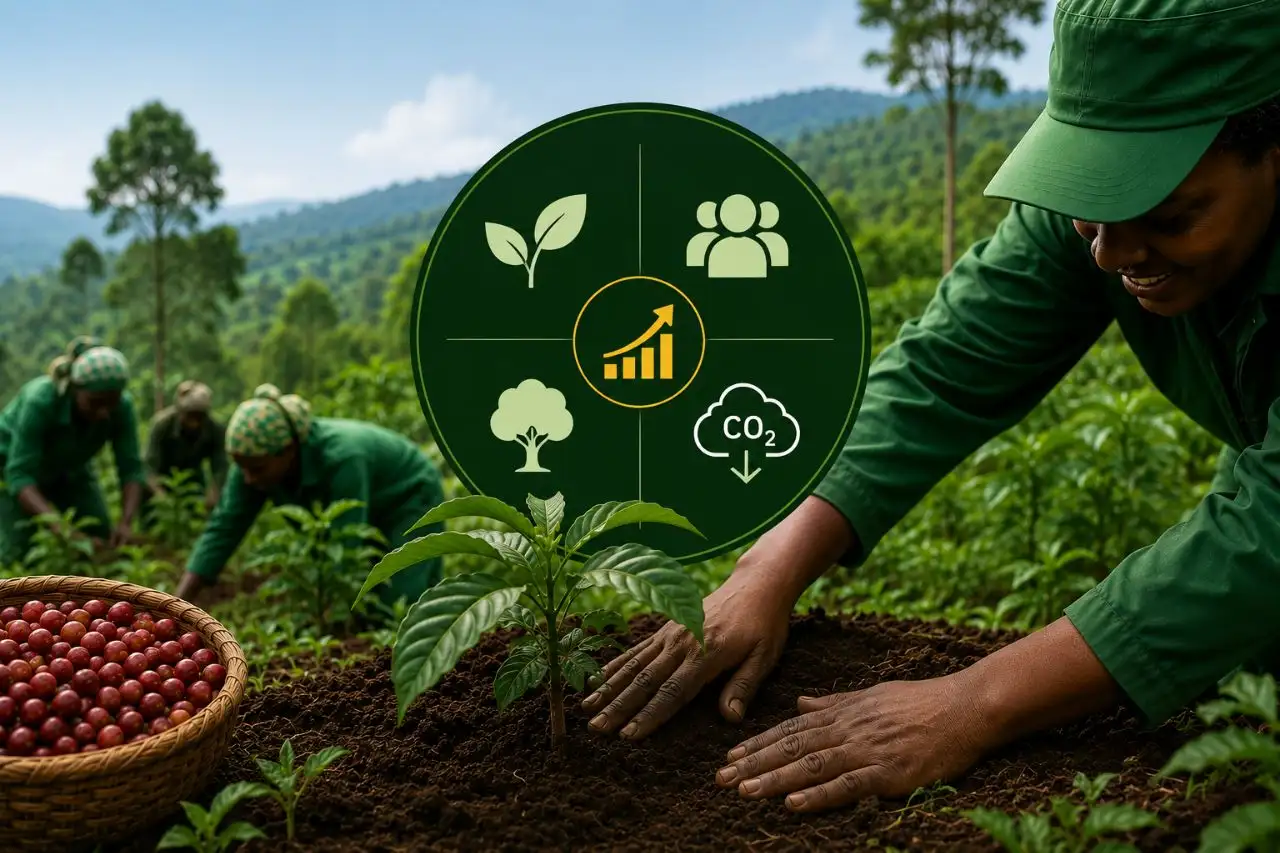
Picture forty-eight billion tree seedlings going into the ground since 2019; more than five for every person on Earth. A significant share of those are coffee and other agro-forestry species, planted directly in the country's coffee-growing highlands. Now picture that campaign quietly driving Ethiopia's biggest coffee export year on record. That's what's happened since Ethiopia launched the Green Legacy Initiative in 2019 as an environmental restoration program.
On July 3, 2026, Ethiopia's Agriculture Minister announced coffee exports had hit a historic high for the fiscal year. Coffee now makes up roughly a third of Ethiopia's export earnings and supports over four million smallholder farmers. Deputy PM Temesgen Tiruneh has directly credited the green development program as the key driver, citing improved water, soil, and ecosystem management in coffee-growing highlands.
The before and after numbers make the case on their own. In 2019, the year the initiative launched, Ethiopia exported roughly 246,000 tonnes of coffee. By the 2024/25 fiscal year, that volume had climbed to around 469,000 tonnes nearly double, in under six years.
The mechanics check out coffee is climate-sensitive, and the initiative has folded millions of coffee seedlings into its planting targets alongside forest species, restoring watersheds and cutting erosion. National forest cover has risen from 17.2% to 23.6% since 2019.
It's not just coffee. Some 120,000 nurseries now also supply avocado, mango, and papaya trees, helping Ethiopia become Africa's second-largest avocado exporter and diversifying farmer incomes. The program has created anywhere from an estimated upto 1.2 million jobs, depending on the source, and opened a new carbon-trading revenue stream through agreements with multilateral partners including the World Bank.
This year's campaign, launched June 15 with a target of 8 billion new seedlings, is also drawing diplomatic attention , ambassadors and foreign delegations have joined tree-planting events, and Ethiopia has secured hosting rights for the 2027 UN Climate Change Conference partly on the strength of this reputation.
The one caveat experts note that seedling survival rates matter more than planting totals, and independent verification of Ethiopia's cumulative figures is thinner than the headline numbers suggest. Still, it's a rare case of a climate program that appears to be paying for itself in export revenue, jobs, and diplomatic capital.