By: Fitsum Getachew
There is a lot of talk about human rights in many public fora nowadays. Particularly people seem to be very actively and sensitively engaged in trying to cope with gender issues, asserting respect of women’s rights. Conferences, workshops, seminars, meetings etc. are held frequently to debate on how to improve the status of women vis-à-vis their male counterparts, how to empower them and make them full beneficiaries of all the positive legal provisions included in our supreme law, the Constitution. Ways and means are being devised to see how women can fill this huge gap with men: get better education, have more access to public offices, be a part of the decision making process at the summit level. Affirmative action has now been a recurrent notion that has often been invoked when we deal with gender issues.
Why are women so distant and are deprived of achieving what men are capable of? What obstructs their way? Why is it that women are still subjected to certain forms of discrimination, while the laws have expressly prohibited them? Who is to blame for the hundred and one ways of undermining the rights of women directly or indirectly, openly or in a covert manner, vis-à-vis what they would in fact deserve? Why are they subjected to less pay for the same kind of duties carried out by men? We can continue to pose questions concerning or rotating around this issue and we might not find adequate response. A number of factors have added up to create such a state or affairs. Even in the so-called advanced societies the rights of women do not quite match those of their male counterparts but definitely they have come a long way. In many sectors women are as important and respected as men and in certain professions women do even better than men.
In our country, even if many people maintain that their lot is less toilsome than others elsewhere in Africa, the discrepancy between men and women is still an abyss. The workload that women have to face in their lives, both in the cities as in the rural areas, is simply intolerable. Women face the brunt of household chores leaving often the men idle. Women are not spared even from going to the fields and be subjected to physical labour just as much as men, beyond and above what is expected of them at home. They have to bear children, feed them, wash and cloth them beside baby sitting them. Men are dispensed with such tasks. Women fetch water and fuel to their homes and have to prepare food for their husbands. And the household chores are many and most of them involve care and hard labour. Making bread itself (preparing the flour, the dough, the yeast etc is a series of difficult tasks that takes a heavy toll on their health, beside what they pain bearing and rearing children. And Ethiopians are accustomed to large families with multiple children. Therefore to talk about the equality of women with men is still a farfetched concept.
Civic organisations such as EWLA, (Ethiopian Women Lawyers Association), APAP, (Action Professional Association for the People), do a lot of advocacy in this sensitive area of gender equality. I remember, a few years ago, the case of an Ethiopian girl accused of murdering her boss in Bahrain (the Middle East), and the girl testified in court that she was pushed to doing it in frustration of the continuous mistreatment and harassment of her employer. This aroused a big sensation and women’s groups made a big legal and moral issue out of it. We often hear of rape, child molestation and sexual violence of various sorts in the mass media and people’s conscience has often been rocked by these episodes but the stories continue unabated. Many compatriots of ours are forced to face the humiliation of getting exiled to the Middle East and European countries to be engaged in humble household services. And there are many reports that the jobs are often very hard. Besides, some employers do not refrain from taking advantage of these young ladies to satisfy their sexual lust and it is the turn of the wives of the bosses to mistreat these housemaids, even when they have not responded to the approach of the men. There are reports that some have been burnt, some pushed off the stairs of the tall buildings and some have preferred to commit suicide instead of facing such a Calvary! The Ministry of Labour and Social Affairs in collaboration with the Foreign Affairs Ministry was trying to probe into these sad and dramatic episodes where our sisters are exposed to dual exploitation, on the one hand by ruthless go-betweens who organise these trips by taking all the financial benefits imaginable, on the other hand, by the beneficiaries of the services abroad.
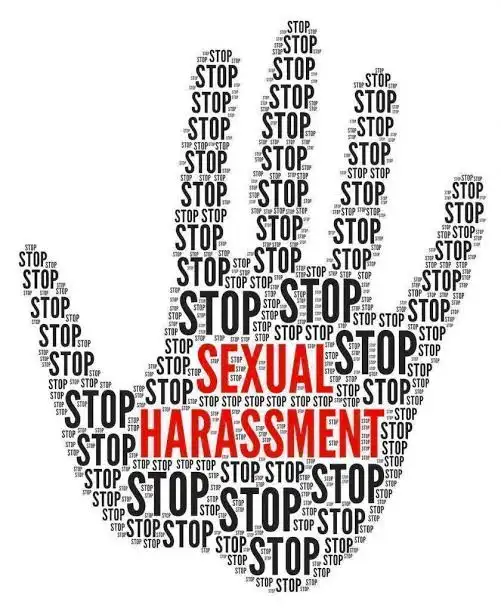
Further more, a new, revised Family Law has been in the making recently and parliament and women organisations have been discussing it in various fora. Therefore, there is something going on to ameliorate the status of women in our society. But what I have rarely heard about is the situation of ladies who work in offices under the direction and supervision of their male bosses. To what extent can these people enjoy their full rights as employees, without the oppressing influence and harassment of their male chiefs? Whom do they report to if they are subjected to some sexual abuse? These are very sensitive issues in the West and if some one lodges a complaint that she has been subjected to an unfair treatment due to her gender or if she has been subjected to some sexual harassment, there would immediately be launched a serious investigation and the culprit will be severely punished by the laws of the land. Do we have any such mechanism/remedy here? And to what extent do our sisters feel free and confident of the system and bring to the attention of the law the hundred and one potential sexual harassments in the offices where they work?
Well, I know of a number of cases in which girls have been subjected to serious sexual harassment and have found themselves in the embarrassing position of not having the courage to report the case as they are indeed at the mercy of their bosses. There is even more to the story! It appears that in many cases they have been employed with such understanding in mind. They are put under pressure especially when their contractual arrangements are about to expire. The girls are left with little alternatives but are made to realize that their fate might depend on their being acquiescent or not. If they reject the advances of their ‘directors’, they are bluntly told that they have no more their positions and new ones may be recruited. This has often been the case with a number of international organisations where the principal staffs (with substantial power of deciding on the fate of our young ladies) are expatriates, specially from African countries. These people are immensely attracted by the proverbial beauty, cordiality and hospitality of Ethiopian ladies and would like to have every sexual gratification by blackmailing them for the positions that they occupy. It is very embarrassing for the concerned ladies to report the cases and in most cases they prefer to swallow their pride and submit to the sexual appetite of the specific head.
In many cases, these ladies realise that they risk to remain without employment and given the kind of important jobs that they might have to forgo in order to have their personal rights and privacy respected and since the hiring and firing power is often entirely in these bosses’ hands, the girls are left with no alternative but either submit to the sexual advances of the bosses or leave their posts. This has brought a terrible moral dilemma on the lives of these compatriots of ours. There are little mechanisms of curbing such affairs in many such international organisations and it is a shame that Ethiopian ladies are being exploited by these sexually insatiable subjects. It is also a shame that these people go around talking about gender equality, international human rights, the campaign against AIDS etc. These subjects believe, just because need might have forced certain ladies to submit to their easy sexual desires, all Ethiopian ladies are cheap prostitutes that they can buy using their international positions as a ‘weapon’ to blackmail them.
Some body should probe into this affair and stop the injustices that are being perpetrated in our own land on our female compatriots by certain expatriates (and there are more than a hundred foreign missions and representations of which Addis Ababa may be proud), and so called international civil servants! Of course this should not imply that sexual harassment does not exist at all in entirely Ethiopian organisations and work places of all sorts. But the point is that in these cases, things can be better managed and taken care of, because there are often people who they can report to steadfastly, whereas in the case of certain international organisations whose headquarters might be New York, Geneva, Paris or elsewhere, the chances are that eventual reports might not reach the appropriate offices promptly as they may encounter difficulties in the process, during their route etc. and appropriate measures might not be taken. To start with, in these international agencies, there seems to reign a certain indifference to the issue that ends up being ‘complacency’ amongst the rank and file of these expatriate community. A dangerous state of affairs has developed into a pacifically and fatalistically accepted taken for granted ‘tradition’. All of our ladies cannot be taken as ‘prostitutes’, even if a few may forgo their pride in exchange for some material benefits, such as a prestigious job, frequent overseas travels, enjoy elegant hotels etc. Not all women can be exchanged, or tolerate a sexual adventure for money of international bureaucrats or their promises of promotion or prolonging of contracts or any other generous donation. This is taking infamous advantage of one’s position and power.
Exemplarily and very courageously, a friend of mine who has found herself in such dilemma has decided to abandon her position and office, because she just could not stand the ‘sexual provocation/advances’ of her intolerable boss. He happens to be starved of sex and cannot accept no for an answer, so much has he been conceded in the past by his feeble or confidence lacking aids and secretaries! These people are so villain that they bluntly use their power to ‘blackmail’ defenceless ladies. Their advances are rude and inelegant and this must have originated from their lack of confidence in their possibilities of attracting and ‘conquering’ ladies on purely friendly and romantic grounds. Rather, they put the condition: either you come with me, or you will not be my employee any more! Isn’t this so shameful!! I do not need to go any further because the concerned people know exactly what I am talking about. What I believe is that those who engage themselves in similar mean ventures should be ashamed of their acts. Gender based organisations should mount a campaign to stop such persistent and indifferently accepted or oversighted sexual harassment and sexual blackmail at all levels and in all organisations, be it in government offices, in private agencies or in highly reputed international agencies.
Many of these young ladies are tempted by easy promotions and passports to a foreign land, especially western countries and rosier prospects. It is clear that the base of our being treated so meanly is our poverty, but there should be some decency in all this, some limit to the excesses of these unscrupulous people. At the moment, things seem to have run out of control. And it is disheartening to see some people subjecting our women to unbearable cheap harassment. It is the conspiracy of silence and indifference that has further emboldened some of these expatriates. They need to be told in clear terms: Halt! Enough is enough! Our ladies are not on sale! We cannot let this go on any further as it gravely infringes on the reputation and integrity of our female population in particular and as a proud and dignified people in general. We cannot let our decent girls be ignominiously blackmailed to do what their conscience would not let them do it. They have the right to a fair treatment and be able to work under normal circumstances. If these people are starved of sex, they should be advised to consult psychiatrists for their problems ( constitutional it appears, as most of them are already wed) or turn their face to the professional commercial sex workers (prostitutes) that they and their agents can easily procure for them in any one of the specialised bars and pubs of the city. Otherwise they should be ready to face a major scandal at international level just as the one we remember of a case with an International NGO who was involved in paedophile activities. Therefore, someone should put restraint on the lustful desires of these people on their secretaries and assistants!
Besides, how can we talk about curbing the spread of HIV when we constantly see that these episodes take place in areas where the campaign is supposed to be institutionally launched, advocated and supported? Doesn’t this amount to a scandalous contradiction? Isn’t this something that these people and their complacent superiors should be ashamed of???