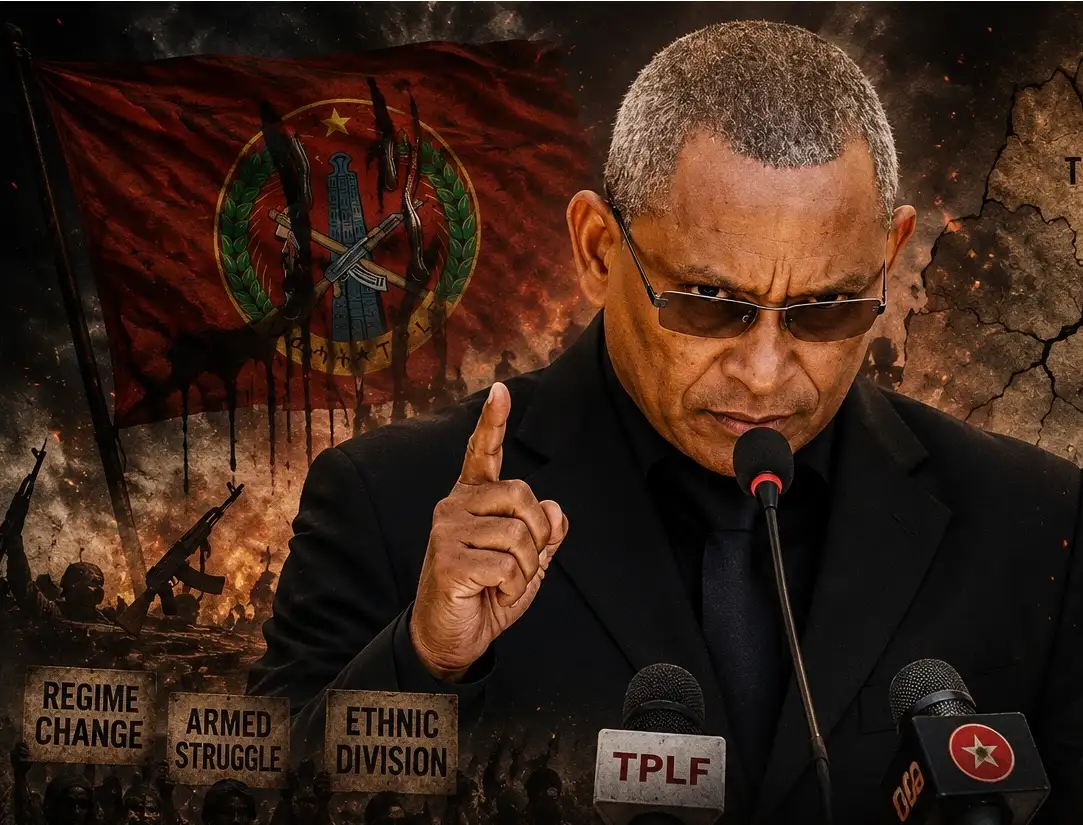
Among the more persistent narratives circulating in Horn of Africa politics is the so-called “Tsimdo arrangement.” The term itself is contested and lacks clear institutional documentation or formal diplomatic verification. Yet it has taken on real political weight as a label for a pattern of alliances between the Tigray People’s Liberation Front (TPLF) and external actors hostile to Ethiopia’s stability. Careful scrutiny shows that “Tsimdo” functions less as a formal treaty and more as an operational framework—an informal but purposeful coordination aimed at weakening Ethiopia, obstructing its regional integration, and keeping the country trapped in cycles of internal distraction.
The historical relationship between Eritrea and the TPLF is real and complicated. It includes wartime cooperation against the Derg, bitter post-independence hostility, and later pragmatic recalibrations driven by shifting regional interests. External powers with stakes in Nile water security and Red Sea access have long viewed Ethiopia’s internal cohesion as a strategic variable. When these interests align with domestic actors willing to prioritize power over peace, the result is a destructive convergence that’s Tsimdo. Its primary objective is not the welfare of any population but the systematic erosion of Ethiopia’s hard-won stability.
The 2022 Pretoria Agreement ended two years of devastating conflict between the federal government and the TPLF. It offered the people of Tigray a chance at relative peace and reconstruction. That opportunity is now under severe strain. The TPLF has resumed provocations, including forced recruitment of youth and efforts to forge alliances with local and foreign anti-peace elements. These moves are not isolated. They reflect a longstanding pattern: for decades the group has subordinated the broader interests of Tigrayans to its own political survival. The people of the region, exhausted by war, need development and stability. They are in no position to endure another round of conflict engineered for power.
Multiple reports indicate coordination between the TPLF and external actors under the Tsimdo umbrella. The alliance has no popular base among ordinary Tigrayans or Eritreans. What unites its participants is a shared desire to see Ethiopia weakened—particularly to block or complicate Ethiopian access to the Red Sea and to keep Addis Ababa preoccupied with internal security rather than regional integration and economic transformation. Independent military and geopolitical claims advanced by certain TPLF figures regarding Assab further bypass federal authority and challenge Ethiopia’s sovereignty.
Particularly alarming is the rhetoric emerging from senior TPLF voices. In a public address, one leader declared that Tigray’s national existence would be confirmed “on the grave of the genocidal prosperity system” and “in the graves of their enemies.” This is not ordinary political hyperbole. It is an open invitation to renewed bloodshed that risks destabilizing the entire Horn of Africa. Such language, paired with reported militarization and external collaboration, directly undermines the Pretoria peace framework and violates the spirit of international commitments to conflict prevention.
Ethiopia’s government has so far responded with restraint, prioritizing institutional capacity, national unity, and diplomatic engagement over reactive escalation. At a time when the country is mobilizing national resources to reduce poverty and pursue regional economic integration, the TPLF’s return to confrontation serves only to isolate Tigray from the benefits of that progress. The group’s historical record—three decades in national power without delivering lasting development or peace to its own region—underscores that its current posture is driven by the clique’s survival rather than popular aspiration.
The international community cannot afford selective blindness. The African Union, United Nations, European Union, and key bilateral partners have invested political capital in the Pretoria process. That investment is now at risk. Actions by armed groups or external actors that systematically undermine a signed peace agreement, recruit by force, and traffic in eliminationist rhetoric must be named and condemned. Silence emboldens those who calculate that renewed conflict will advance their agendas.
True regional stability requires clarity. Ethiopia’s efforts to consolidate peace, protect its sovereignty, and pursue constructive integration with its neighbors deserve consistent international support. Narratives and alliances that seek to reverse those gains—whether labeled Tsimdo or otherwise—should be treated as the threats they are. The people of Tigray, like all Ethiopians, need development, not graves. Global leaders must insist on accountability, defend the integrity of the peace process, and refuse to look the other way while a fragile recovery is deliberately endangered.