By:Bethel Etefa
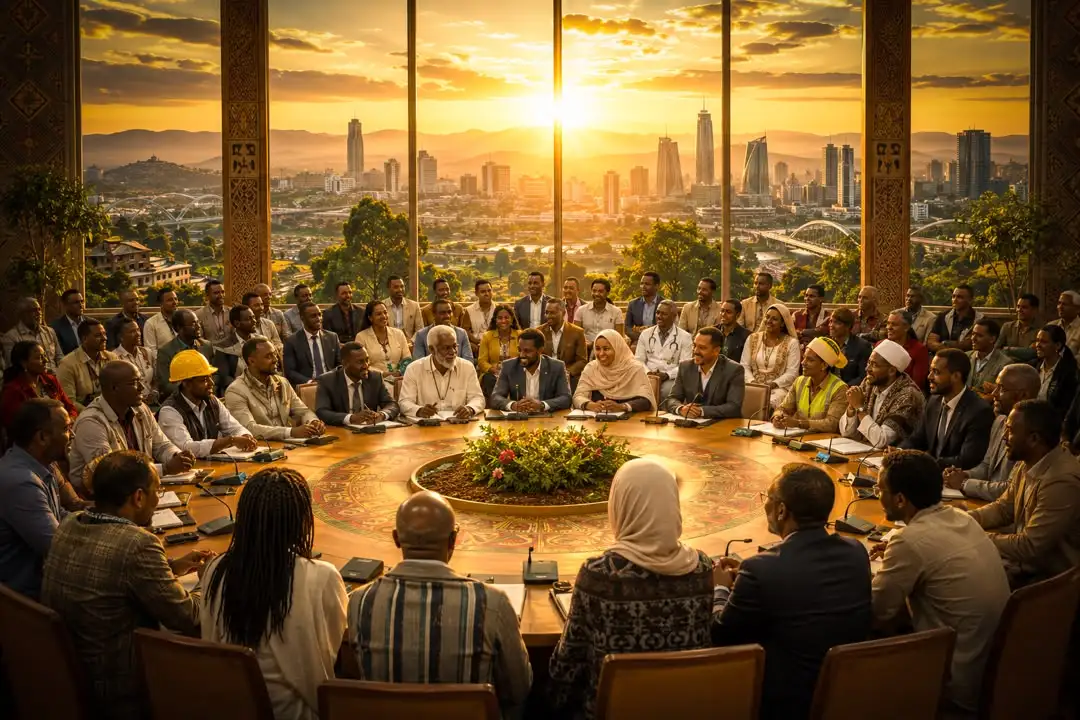
On the morning of July 15th, more than four thousand delegates walked into the Addis International Convention Center carrying something Ethiopia has rarely allowed its citizens to carry into one room together: permission to disagree, out loud, about the questions that have divided the nation for generations. By the time they leave, three weeks later, the country will know whether it can do what it has almost never done before; settle its hardest arguments at a table instead of on a battlefield.
That is the real stakes of the National Dialogue Conference, and it is why this moment deserves to be read as more than a news item. It is a test of whether Ethiopia's political culture itself can change.
Four Years in the Making
The Ethiopian National Dialogue Commission (ENDC) was not created on impulse. It was established in late 2021 by the House of Peoples' Representatives, under Proclamation No. 1265, at a moment when the country was confronting war in the north and a backlog of unresolved questions about identity, power, and the shape of the state. As the Ethiopian News Agency (ENA) has documented, what followed was four years of grassroots groundwork before a single national conference session was held: agenda collection across 1,234 woredas covering roughly 93 percent of the country, twenty-two rounds of stakeholder consultation, and dedicated outreach to the Ethiopian diaspora.
Out of that process, the Commission distilled eight thematic pillars now anchoring the Conference among them nation-building and questions of identity, the structure and form of government, federalism and power-sharing, and the status of contested issues such as regional borders and national symbols, according to ENDC's own published agenda. This is not a dialogue improvised in a single sitting. It is the product of one of the most extensive public consultation exercises attempted anywhere on the continent.
A Different Kind of Room
What makes the Conference distinct, as ENA's coverage of the opening has noted, is that it was built from the grassroots upward rather than shaped primarily by political elites, as many of Ethiopia's past national conferences were. Regional states, political parties, civil society, religious institutions, traditional leadership, youth and women's groups, and the diaspora are all represented in the room together a composition that reflects the country itself rather than a narrow circle of power.
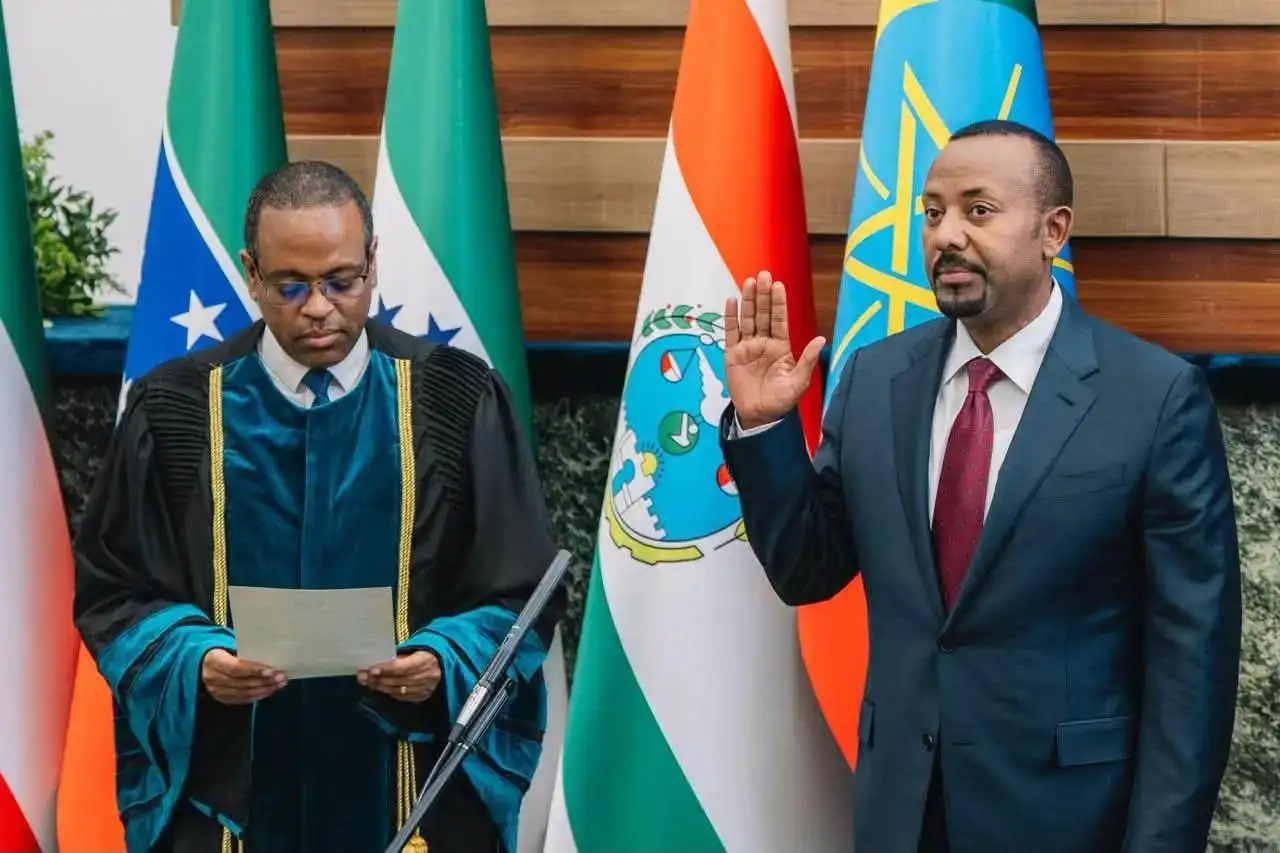
Presiding over the opening, Prime Minister Abiy Ahmed set the tone for what the process is meant to replace, urging Ethiopians to resolve their disagreements before they escalate from words into action. It is a simple standard, but a demanding one: it asks the country's political actors to treat dialogue not as a formality that precedes conflict, but as a genuine substitute for it.
The stakes were underlined further by the international response. According to reporting by allAfrica, the opening drew endorsements from leading African statesmen and regional institutions, a signal that the process is being watched well beyond Ethiopia's borders as a potential model for resolving deep political division without armed confrontation a distinction that elevates the Conference from a domestic exercise into one of continental relevance.
What Happens in the Room Will Not Stay There
It is tempting to treat a three-week conference as a self-contained event. It is not. The recommendations produced by the delegates are expected to feed directly into Ethiopia's legislative agenda meaning decisions made in these sessions on federalism, identity, and governance will eventually surface as law, as institutional design, and as the working relationship between the state and its citizens for years to come.
That is also why the process cannot be measured by the eloquence of its opening remarks. The Commission and the government have themselves set a high bar: a dialogue that produces a report nobody implements would do more damage than no dialogue at all, confirming every doubt about whether Ethiopians can resolve their differences without coercion.
An Honest Reckoning, Not a Victory Lap
The Commission has not concealed the limits of what has been achieved. Coverage from Addis Standard and Wazema News has noted that consultations were not completed in parts of the Tigray region, and that the weeks around the Conference's opening also saw demonstrations in Addis Ababa calling for fuller implementation of the 2022 Pretoria Agreement. A process claiming to be nationally owned cannot pretend those gaps do not exist and the fact that the Commission and national media have reported them openly is itself part of what gives the process credibility. A dialogue that only tells Ethiopians what they wish to hear would not be a dialogue at all.
The Test Ahead
Ethiopia has spent much of its modern history resolving its deepest disagreements through force, decree, or prolonged stalemate. What is unfolding now in Addis Ababa is an attempt, on a scale rarely tried in Africa, to resolve them instead through sustained argument, patience, and compromise among the very people affected by the outcome.
That is a harder test than any war and a far more constructive one to pass. Whether Ethiopia meets it will depend not on the eloquence of what is said inside the Addis International Convention Center, but on what the state, and its citizens, are willing to do with the outcome once the delegates go home.