By: Demis Mekuriyaw
Ethiopia's national dialogue advances toward a critical stage; a familiar pattern has begun to emerge: those who declared the process "dead on arrival" are now working, quietly and not so quietly, to make that prediction come true. The irony is hard to miss. The dialogue was designed precisely because the country has accumulated deep political disagreements, competing historical narratives, unresolved grievances, and divergent visions of the future. It was never meant to be a gathering where everyone sits around a table, nods in agreement, and leaves smiling. It was built to do something harder: pull competing voices into the same political space and offer them an alternative to confrontation. A national dialogue without disagreement isn't a national dialogue at all. It's a ceremony.

The invitation, notably, was broad. Political actors, representatives of different communities, civil society, religious institutions, women and youth groups, members of the diaspora, and even actors associated with armed movements were all given avenues to participate. The message underneath that invitation was simple: the country's future could not be negotiated exclusively by those who already agreed with one another. Those who chose dialogue over force stepped into the arena, and they are now doing precisely what was asked of them: competing over ideas, airing grievances, defending interests, and trying to negotiate a common political future.
That process was always going to be uncomfortable. People don't arrive at a national dialogue carrying identical experiences. They come with memories, fears, political demands, historical interpretations, and sometimes deeply incompatible visions of the state. The goal was never to erase those differences but to build a political mechanism through which they could coexist without repeatedly tipping into violence. Difficult conversations, then, shouldn't unsettle us. They should be expected. Countries that have undertaken serious reconciliation processes have faced sharp disagreements and contested issues as a matter of course; there's little reason Ethiopia should be an exception. If anything, the harder the questions get, the more meaningful the process becomes provided the people at the table stay committed to resolving them through dialogue rather than outside it.
A grievance spoken across a table is a fundamentally different thing from a grievance turned into mobilization on the street. A political demand argued in a forum can be met and challenged by another demand. A historical narrative can be confronted by a rival narrative. One interest can meet another. And out of that friction, compromise eventually becomes possible. That, in essence, is what political dialogue is for.
From Listening to Acting
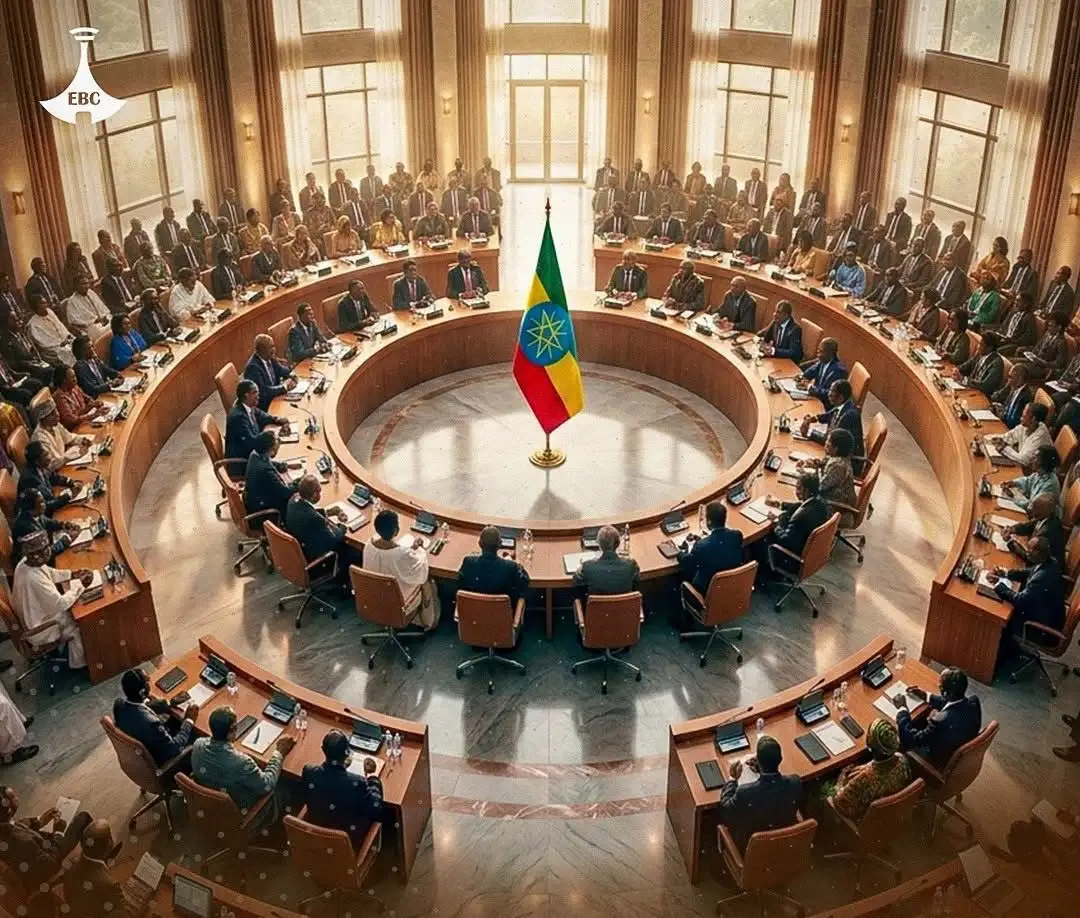
This is why the latest developments deserve attention. The main conference, which formally opened in Addis Ababa on July 15, 2026, has drawn nearly 4,000 delegates representing regional stakeholders, woreda-level constituencies, political parties, religious institutions, government bodies, civil society, women, youth and the diaspora. Deliberations are organized around eight nationally identified agenda pillars: state building; the structure and form of government; the status of federal cities such as Addis Ababa and Dire Dawa; religious affairs; institutional building, rule of law, and human rights; socio-economic affairs and the concerns of farmers and pastoralists; anti-corruption and good governance; and peacebuilding. Participants have moved through successive layers of deliberation, from micro-groups of 10 to sub-groups of 50 to strategic groups of 250 and now to thematic working groups of 500, each tasked with refining and validating recommendations on its assigned agenda item. That structure is already bearing fruit: as of August 11, 2026, four of the eight thematic working groups, covering peacebuilding, religious affairs, the structure and form of government together with the political and electoral system, and anti-corruption and good governance, have reached consensus and formally signed off on their recommended proposals, according to the Ethiopian National Dialogue Commission. The remaining working groups continue their deliberations, according to Professor Mesfin Araya, Chief Commissioner of the Commission. But even the close of this phase won't mark the end of the dialogue, quite the opposite. The Commission is preparing to consolidate the recommendations gathered from participants across the country and hand them to the institutions expected to act on them: the executive, the legislature, the judiciary, political parties, and religious institutions. It's an important handoff, from listening to acting.

Professor Mesfin Araya, Chief Commissioner of the Ethiopian National Dialogue Commission
Professor Mesfin has also been candid that the dialogue was never designed to produce all its answers overnight. Some issues will take time. Some may need other mechanisms entirely. Not every item on the agenda can be resolved in a single forum, and that shouldn't be read as a weakness—it's simply the reality of national reconciliation. No country accumulates decades of political grievance and then dissolves it in one round of consultations.
The real question isn't whether every disagreement gets settled at once; it's whether a credible mechanism now exists to work through them progressively. That's why the Commission's stated intention to follow up on implementation matters so much. The process can't end with a document handed over and forgotten. The public needs to see what actually happens next, what gets implemented, what stalls, what gets rejected, and why. That follow-through is where the process's credibility will ultimately be tested.
Criticism From Within, Sabotage From Outside
But as the dialogue reaches this pivotal stage, another dynamic is becoming harder to ignore. Those who rejected the process from the start are now trying to undermine it from the outside. The TPLF and affiliated networks that refused to take part in the national dialogue are working to discredit and ultimately derail it through coordinated social media campaigns, selective narratives, and efforts to amplify sensitive issues in ways designed to make disagreement look like proof of failure.
A distinction is worth drawing here. There is nothing wrong with criticizing the national dialogue. There is nothing wrong with questioning the Commission, disagreeing with its recommendations, or challenging what participants have said; criticism is part of any serious political process. But there's a real difference between engaging in a difficult political conversation and trying to delegitimize the conversation altogether. Those who chose to stay outside the process have little standing to claim ownership over what happens inside it, and actors who declined the chance to compete over ideas at the table shouldn't get to redefine the entire process through campaigns waged outside it.
Take the question of Addis Ababa, for instance. There's nothing unusual about an issue like this surfacing in a national dialogue. If a topic carries political weight for different constituencies, why wouldn't it belong in a forum whose whole purpose is to bring divergent interests into the open? The problem isn't that sensitive issues get discussed—it's when fragments of those discussions get stripped of context and presented as if disagreement itself is evidence the process is collapsing. That reading misunderstands what a national dialogue actually is. By its nature, it's a reflection of divergent interests; if everyone showed up holding the same position, there'd be little need for dialogue in the first place. The presence of competing views doesn't mean the process has been hijacked; it means the process is surfacing divisions that already exist in Ethiopian society. The real test is what participants do with those differences: Can they argue without fighting? Disagree without delegitimizing one another? Defend their own interests while accepting that others have interests too? Can they move past "my position or nothing" and toward the harder, slower politics of compromise?
Social media makes all of that harder. A single controversial remark can be lifted out of a broader discussion and amplified until it seems to represent the whole process. One sensitive issue can be made to look like the only issue on the table. A disagreement can be spun into a headline announcing the death of dialogue. But a national dialogue can't fairly be judged by one argument, one participant, or one contentious subject. It has to be judged by the breadth of participation, the seriousness of the issues raised, the freedom with which people were able to speak, the recommendations that emerge, and ultimately what the responsible institutions choose to do with them.
A Space That Matters
And here's the point worth sitting with: the process has already reached a stage its earliest detractors insisted it would never reach. Four of the eight thematic working groups have already signed consensus agreements on their recommendations, a concrete marker of progress that didn't exist even a few weeks ago. The Commission is now preparing to consolidate recommendations from participants across the country and transmit them to the institutions responsible for acting on them.
That doesn't mean every problem has been solved, or that every Ethiopian has bought into the process, or that every recommendation will be adopted. It certainly doesn't mean the country has suddenly transcended its political divisions. What it does mean is something more modest and more real: Ethiopia has created a political space where some of those divisions can be voiced without immediately curdling into confrontation.
That space matters, because Ethiopia doesn't need a dialogue in which everyone agrees. It needs a political culture in which disagreement doesn't automatically justify forcing a system where one actor can tell another, "I disagree with you," without the next sentence being, "And therefore you have no place in this country." It needs a political culture capable of turning grievance into negotiation and competing interests into arrangements for coexistence. None of that happens overnight, and none of it happens without uncomfortable conversations along the way. The tougher the questions become, the more important it is that people stay at the table.
Which is exactly why attempts to abort the process deserve to be taken seriously.
The campaign by the TPLF and affiliated networks to delegitimize the dialogue isn't simply a dispute over one agenda item. It risks dragging political competition back toward the very arena the national dialogue was meant to offer an alternative to: polarization, confrontation, and the weaponization of competing narratives.
The answer to that, though, isn't to silence criticism; the dialogue ought to be strong enough to withstand it. If an argument is weak, defeat it with a better one. If a recommendation is flawed, challenge it. If a procedure needs fixing, demand the fix. If an institution fails to follow through, hold it to account. What shouldn't happen is mistaking the presence of disagreement for the failure of dialogue itself. That would mean condemning the process for doing exactly what it was built to do.
The Real Work Is Only Beginning
Ethiopia's national dialogue was never sold as an easy journey. It exists because the country carries difficult questions that have resisted easy answers for generations. The turbulence surrounding it now isn't necessarily proof that it's gone off course; it may simply be the friction that comes from finally putting some of the country's deepest disagreements into a single political space.
The real work is only beginning. Recommendations need to be consolidated. Institutions need to act on them. Political parties need to stay engaged. Religious and civic bodies need to contribute. The public needs to watch what happens once the consultations end. And the Commission needs to keep tracking whether its recommendations translate into action and tell the public honestly when they do or don't. That follow-through is what turns dialogue into something more than dialogue: a bridge between grievance and policy, between disagreement and compromise, and, eventually, between a divided present and a shared national future.
Ethiopia should resist the urge to measure its national dialogue by how much agreement it produces today. A better measure is whether Ethiopians who once saw one another only through the lens of political confrontation can stay in the same room long enough to actually listen. If they can do that, the process has already achieved something significant. If they can then turn those arguments into recommendations and those recommendations into institutions and policy, it will have achieved something greater still.
The goal was never to make Ethiopia's differences disappear. It was to make it possible for Ethiopians to live with those differences without repeatedly destroying one another. That is the nature and the purpose of national dialogue, and Ethiopia is no exception. The difficult conversations aren't a sign that the process is dying. They're the reason it exists. Which is precisely why it has to be allowed to continue.