By: Fistum Getachew
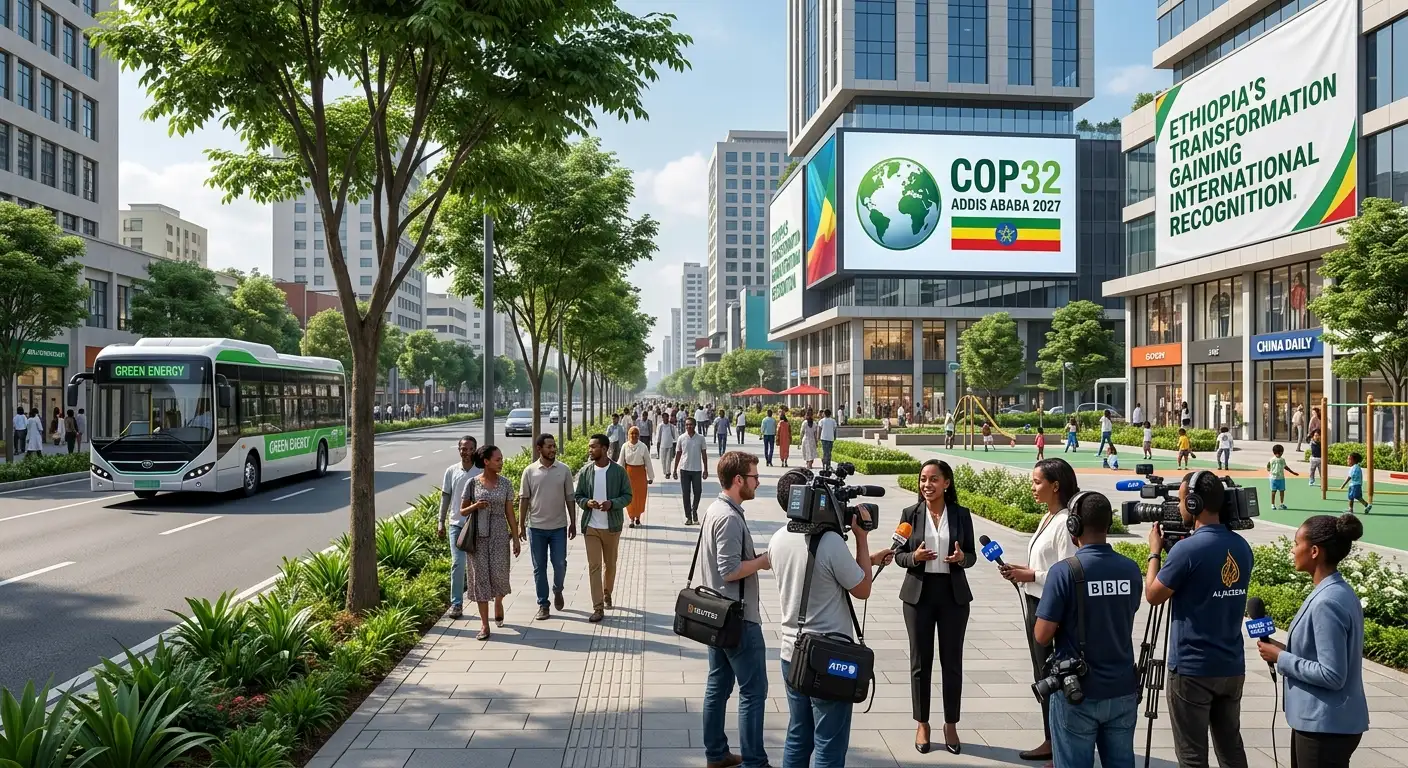
During the past few days, Ethiopia has been acquiring attention and spotlight from international media outlets, owing presumably to the various major achievements the country has been recording in the past few years in various sectors. There have been major and significant events carried out in Ethiopia during the past several months. The economic reforms that the incumbent has been carrying out are said to have brought about substantial improvement in the macroeconomic landscape of the country. And this has been noted and commended by international financial institutions such as the IMF and the World Bank.
Ethiopia’s ambition to continue to grow by double digits every year, as it has been doing during the past several years, has resulted in the adoption of a number of major policy proposals. The major pillars of the envisaged economic expansion lie in the improvement of the standard and quantity of certain products and services.
Agriculture is, of course, the backbone of the economy, but industrializing the agriculture sector with modern and mechanized use of farming, the more widespread use of fertilizers and selected seeds, and the harvesting of agricultural products more than once a year have taken center stage in the sector. Likewise, expanding irrigation, as has been done with the cultivation of wheat—something that was unheard of until a few years ago—has been added to the picture.
Similarly, the planting of fruits such as mango, papaya, avocado, and other fruits, and the extensive planting of coffee trees, all under the Green Legacy Initiative, have also contributed to the previously unforeseen growth of the sector.
The Green Legacy Initiative by itself has been attracting tremendous attention from the international media, which cover a lot about the environment and climate change, whose awful consequences are always in the headlines of international news media outlets. These outlets have been commending the initiative and commitment of the Ethiopian government to green the country and conserve the country’s landscape and biodiversity in its efforts to contribute to the halting of climate change.
The consistent efforts of the Ethiopian government during the past several years have not only attracted the attention of the world but also gained recognition and praise from all corners of the world, so much so that COP32 will be held in Addis Ababa in 2027. This is, of course, a major achievement because it will be a wonderful occasion to introduce to the world at large what is going on in Ethiopia and what is there to really appreciate and emulate from Ethiopia’s experience.
The Green Legacy Initiative has certainly been emulated by some African countries, and this has been hailed as a success.
Another important development that Ethiopia has been undertaking, and still continues to undertake, is the redevelopment of almost all of the major urban areas of the country with what is called the Corridor Development Project. People who have come to Addis after some time have been admiring the ‘new face of the city,’ which they said was transformed and had become a real pearl full of greenery: new avenues with wonderful street lights, very friendly sidewalks, parks practically everywhere, along with recreation centers and places where kids could play and pass some leisure time relaxing while the grownups could indulge in sports activities such as jogging and playing football. Sanitation services every few kilometers are also delivered comfortably. Addis, as the venue of so many diplomatic missions, international bodies, and agencies, has come to live up to its name and reputation, delighting the various organizations that have their headquarters or branch offices here.
Another major attraction that foreign media outlets have found in Ethiopia lately is the expansion of its clean energy potential through a number of initiatives the government has been taking and completing. In this respect, the outstanding megaproject that was underway for about 14 years is the completion of the Grand Ethiopian Renaissance Dam (GERD), built on the Nile River at a locality called Guba on the border with Sudan.
The GERD has the capacity to generate more than 5,000 megawatts, and this can not only relieve the problem of the scarcity of power in Ethiopia but is also in a position to enable it to export to neighboring countries, including Sudan, Kenya, Djibouti, and even Tanzania. Besides the GERD, Ethiopia is also constructing other major dams, one of which is the Koyisha Hydropower Project in the south of the country, capable of generating thousands more megawatts. If we add to this the potential the country has in geothermal, wind, and solar energy, we can easily guess how much clean energy the country can generate and how much it contributes to the reduction of gas emissions and decreases the use of fossil fuels to a minimum. Ethiopia has been developing a green economy following a strategy that is in conformity with the world environmental body.
The Ethiopian government realizes that the country’s trajectory of growth underway should not be restrained by a scarcity of energy for its ever-expanding industries. But it also realizes that the presence of peace in every corner of the country is a prerequisite (condicio sine qua non) that cannot be overlooked or discarded. And that is why it established, four years ago, a body called the National Dialogue Commission, with the right professionals entrusted with the task of going around the country and consulting with people of all parts of society in every corner, with the objective of gathering the major points that they would want the National Conference to discuss and reach a certain consensus on regarding what to do in the future.
This initiative of the government was commended by many, not only in Ethiopia but also among the international community—an experiment that was carried out by other countries as well and has given good results.
As Ethiopia has been mired for decades in certain internal disagreements on certain socio-political issues that relate to its being a multi-ethnic and multi-religious state, the establishment of the National Dialogue Commission has been taken as a godsend. Currently, the commission has prepared the National Conference, where the major agendas collected from all over the country are under discussion in a peaceful and orderly manner.
Eight agenda pillars have been chosen for deliberations at the conference. The selection of the eight agendas was determined from public collections across 1,234 woredas. These include State Building, Structure and Form of Government, the Status of Federal Cities (such as Addis Ababa and Dire Dawa), Religious Affairs, Institutional Building/Rule of Law, Socio-economic Affairs, Anti-Corruption/Good Governance, and Peacebuilding. This event as well has been in the eyes of many correspondents of various international media outlets, eagerly following the proceedings and reporting on the outcome.
Ethiopians are very hopeful for the success of these consultations, which are widely expected to usher in a new era in the country. There is also hope that all the dust around the perennial misunderstandings and disputes among communities, real or perceived, which have piled up across decades and even more, will be settled once and for all.
The ultimate goal is to help citizens come to terms with certain confused and misleading narratives largely disseminated by unscrupulous so-called ‘social media influencers’ who have been discovered trying to often play into the hands of historical enemies of Ethiopia. To this end, the National Dialogue Commission has been trying to bring together all political and community forces and representatives around a table and engage in protracted consultations on all of the outstanding issues that they want to be addressed through consultations.
There have been several causes of disputes and, at times, even conflicts and violence among citizens. It is clear that hostilities and economic growth and prosperity cannot go together. They are mutually exclusive. There can be no investment in a climate of uncertainty, including the mere perception of it, where peace becomes doubtful or precarious. For instance, there can be no tourism with peace in doubt, and that can constitute a huge handicap for expansion.
For a country such as Ethiopia, this is a huge loss because tourism has been rated as one of the major pillars of the economy. In fact, the recent explosion in the construction of several resort areas in every corner of the country has become a huge tourist attraction with the potential of growing further a lot. The recent trend of the growth of tourism in Ethiopia has been very encouraging, and this has also attracted the attention of international media. The reporting on the current national conference is also a result of this interest in what is actually going on in Ethiopia. As there are many African countries with problems similar to Ethiopia’s, there is a vigilant interest in the process and outcome of the conference on their part. They are closely watching by sending envoys and receiving reports. In fact, more than 400 correspondents have been reporting on the National Conference, where 4,000 delegates have been deliberating for the last month and are reaching the epilogue with a successful consensus. The National Dialogue Commission is also expected to soon come up with recommendations based on the outcome of the conference.
Another very important current development in Ethiopia that has attracted the attention of the international media is its officially declared quest to secure access to the sea on the Red Sea, which it lost three decades ago under ‘mysterious circumstances.’ The rapid growth of the economy of the country has contributed to the urgency of securing sea access through diplomatic and political means because it is inconceivable that a country the size of Ethiopia should remain landlocked while it is very near to the sea! Besides, international law and practice allow Ethiopia to legitimately seek access to the sea also for security and preservation of sovereignty reasons.
Ethiopia believes that access to the sea will be the right springboard from which its economic growth will further augment, and that will be a blessing even for its neighbors, who would benefit from their close relations with Ethiopia. Such integration is also part of the long-term plan of Africa. That is why interest in Ethiopia by international media has been on the rise, and this will ramp up a positive image for it.