By: Bethel Etefa
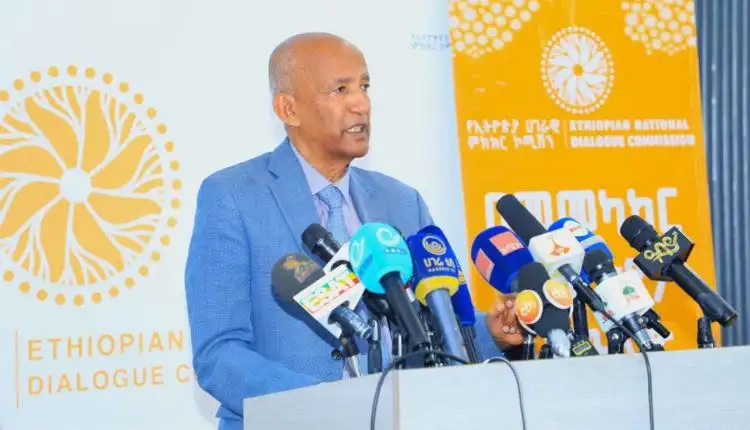
In a scene that will be remembered as a defining moment in modern Ethiopian history, thousands of citizens from every region, faith, and walk of life gathered under one roof to do what many once thought impossible: talk to one another, and truly listen.
After 40 remarkable days of deliberation, Ethiopia's National Dialogue Conference drew to a close this past weekend at the Addis Ababa International Convention Center, marked by a ceremony rich in symbolism and national pride. The hall—packed with former and sitting leaders, senior government officials, religious elders, and international dignitaries—opened to the solemn strains of the national anthem. Prayers followed across Ethiopia's many faiths: a fitting tribute to a process anchored in unity through diversity.
Nearly 4,000 Ethiopians answered the call to participate: farmers who till the land, pastoralists who roam it, women and youth who represent its future, elders who carry its memory, and political and civil society representatives who speak for its diverse voices. Diaspora Ethiopians crossed oceans to take part, providing a powerful reminder that the Ethiopian family extends far beyond its physical borders. Over six intensive weeks, these delegates tackled eight of the nation's most consequential thematic pillars, emerging with roughly 400 concrete recommendations designed to address the political, social, and institutional questions that have long tested the country's resilience.
President Taye Atske Selassie stood before the gathering and called the event a major milestone—a moment that reinforced Ethiopians' shared aspirations and proved that even the most difficult disagreements can be worked through constructively when peaceful engagement replaces division. His words captured the spirit of a nation choosing dialogue over discord.
Speaker of the House of Peoples' Representatives Tagesse Chafo went further, declaring the conference a historic chapter in which Ethiopians collectively authored their own future. In his address, he delivered what may stand as the defining line of this national moment: that Ethiopia's challenges can be solved around the table through dialogue, not through the politics of force and war. The 400 recommendations now on the table, he noted, will serve as the bedrock for policy reform, institutional renewal, and a lasting national reconciliation.
The achievement did not go unnoticed beyond Ethiopia's borders. Former Nigerian President Olusegun Obasanjo, serving as the African Union's High Representative for the Horn of Africa, told the gathering that there is simply no substitute for dialogue and peace. He called the conference a historic undertaking—one that other African nations would do well to study and emulate.
As the closing ceremony drew to an end, the message from Addis Ababa was unmistakable: Ethiopia has chosen the path of unity, and it has chosen it together. The recommendations produced over these 40 days now stand as a foundation—not just for tomorrow's policies, but for a generation of Ethiopians who will inherit a country more stable, inclusive, and united than the one before it.
Sources:
Horn Diplomat (Hargeisa): "Ethiopia Concludes Landmark 40-Day National Dialogue" (Aug 24, 2026)
Ethiopian News Agency (via allAfrica): "East Africa: Ethiopia's National Dialogue Lays Foundation for Nation-Building — Participants" (Aug 24, 2026)
Fana Media Corporation (FMC): "National Dialogue Marks Historic Turning Point in Ethiopia's Quest for Lasting Peace and National Consensus — House Speaker" (Aug 22, 2026)
allAfrica.com: "Ethiopia's New Assertiveness — Dialogue, Dams and Strategic Partnerships" (Aug 23, 2026)