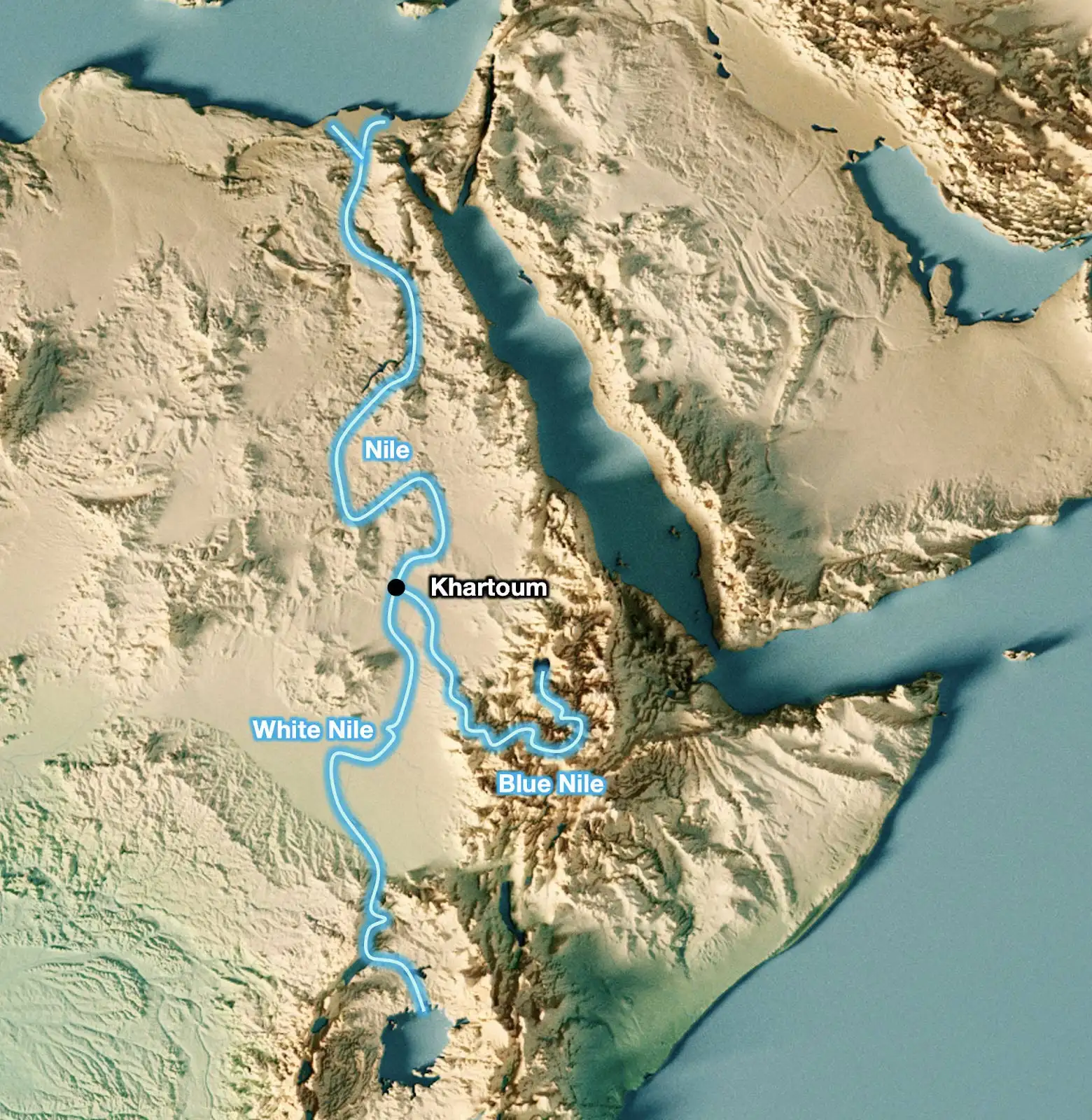

Although the Abbay River serves as the primary economic lifeline for the nations of Northeast Africa and the Horn, it has long remained a stage for enduring geopolitical conflict and diplomatic friction.
As the source of 85 percent of the river’s flow, Ethiopia is consistently viewed as a national security concern by Egypt, a nation that generates not a single drop of the water. In Cairo’s political corridors, a peaceful and stable Ethiopia is perceived as a threat, while internal Ethiopian turmoil is welcomed as a strategic advantage. To maintain control over the Nile, Egyptian strategists have persistently pursued a policy aimed at keeping Ethiopia weak and fragmented, seeking to enforce absolute hydro-hegemony across the basin.
This ambition has deep historical roots. In the 19th century, driven by the vision of constructing a "Greater Egypt," Khedive Isma'il Pasha attempted a military invasion of Ethiopia, only to suffer decisive defeats at the Battles of Gundet and Gura. Subsequent water-sharing frameworks continued this pattern of exclusion. Through the 1929 and 1959 Nile Waters agreements, Egypt sought to deny Ethiopia its natural rights. The 1959 treaty allocated 55.5 billion cubic meters of water to Egypt while leaving Ethiopia, the primary source, with zero share, a move that underscored Cairo's unilateral policy.
Across decades, successive Egyptian leaders have maintained this geopolitical posture regardless of shifting administrations. Gamal Abdel Nasser actively sought to destabilize Ethiopia by arming Eritrean insurgent groups and supporting Somalia. During the Ogaden War, Anwar Sadat supplied modern weaponry to the regime of Siad Barre. Hosni Mubarak leveraged diplomatic influence to block international funding and loans for Ethiopian Nile development projects. Most recently, following the inception of the Grand Ethiopian Renaissance Dam (GERD), Abdel Fattah el-Sisi has exerted continuous diplomatic pressure and security threats to constrain Ethiopia's sovereign development.
Rather than engaging in direct military confrontation, Egypt’s strategy relies heavily on proxy warfare, exploiting domestic political and ethnic divisions within Ethiopia to undermine the nation from within.

Against this backdrop, Ethiopia’s establishment of the National Dialogue Commission to sustainably resolve its internal conflicts has created significant anxiety in Cairo. Resolving domestic differences through dialogue silences internal conflict, allowing Ethiopia to channel its full capacity, energy, and financial resources toward development, an outcome that directly dismantles Egypt's long-standing strategy.
To disrupt this process, efforts have intensified to derail the dialogue by supporting armed factions and disseminating media propaganda aimed at eroding public confidence in the national reconciliation process.
This dynamic underscores a vital reality: every domestic conflict and internal clash yields a direct advantage to historical adversaries. The National Dialogue represents more than an internal political effort; it serves as a critical national undertaking to protect Ethiopian sovereignty from external interference. Thwarting these external maneuvers ultimately requires laying down arms and resolving internal differences at the consultation table.